
KEF
KEF speakers from Maidstone, Kent, where KEF has designed speakers since 1961, and every loudspeaker here is built around Uni-Q, the coincident driver behind the signature KEF sound. The collection runs from the compact Q Series and the LS50 Meta to the hand-built Reference 1 Meta, wireless systems such as the LSX II, and the floorstanding Blade models and the Muon. Ask Audio Lounge to match a pair to the room, the amplifier and the music.
 £499.00Select options This product has multiple variants. The options may be chosen on the product page
- £649.00Select options This product has multiple variants. The options may be chosen on the product page
- £649.00Select options This product has multiple variants. The options may be chosen on the product page
 £799.00Select options This product has multiple variants. The options may be chosen on the product page
- £1,099.00Select options This product has multiple variants. The options may be chosen on the product page
- £1,250.00Select options This product has multiple variants. The options may be chosen on the product page
- £1,299.00Select options This product has multiple variants. The options may be chosen on the product page
- £2,099.00Select options This product has multiple variants. The options may be chosen on the product page
- £2,199.00Select options This product has multiple variants. The options may be chosen on the product page
- £3,499.00Select options This product has multiple variants. The options may be chosen on the product page
- Price range: £8,000.00 through £9,099.00Reserve & Collect This product has multiple variants. The options may be chosen on the product page
- £25,000.00Reserve & Collect This product has multiple variants. The options may be chosen on the product page
- £33,000.00Reserve & Collect This product has multiple variants. The options may be chosen on the product page





KEF Uni-Q and MAT
A KEF Uni-Q driver sets the tweeter in the middle of the cone that carries the midrange, so both share one acoustic centre and the sound spreads through the room from a single source. KEF designed and patented the arrangement, and the benefit reaches every seat: the stereo image holds together away from the central chair, so the whole room hears the music much as the person in the middle does.
KEF Meta speakers add Metamaterial Absorption Technology, or MAT, a maze-like structure behind the tweeter dome that absorbs the unwanted sound radiating from the rear of the driver, sound that would otherwise colour the treble. The LS50 Meta was the first loudspeaker with metamaterial, and MAT now runs through the Q Series, the R Series, The Reference and Blade.
From the Q Series to The Reference
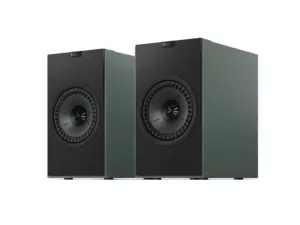
The KEF Q Series opens the passive range. KEF Q Series speakers such as the Q1 Meta and Q3 Meta bring Uni-Q with MAT to rooms of every size, while the larger Q Concerto Meta revives the name of the Concerto, the first three-way standmount KEF made. The LS50 Meta continues the line of the LS50, created for the fiftieth anniversary of KEF, and the three-way R3 Meta, partnered by the S3 Floor Stand that KEF designed for the purpose, shares drivers with the largest model in the R Series.
At the summit, the Reference 1 Meta is the only standmount in The Reference, a series hand-built in Maidstone. Each pair is matched in production against a laboratory reference standard, which is how the series earned the name. Every one of these KEF bookshelf speakers is passive, so choose the amplifier with care, with the integrated amplifiers as a sensible starting point, and set the cabinets on speaker stands built for the job.
KEF Wireless Systems
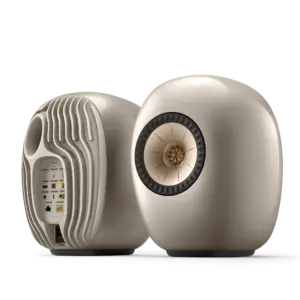
KEF wireless speakers build the amplifiers, the streaming and the digital inputs into the cabinets, so a pair plays from a phone, a network or a television without a separate amplifier. The LSX II, styled by Michael Young, is the compact choice; the LS50 Wireless II brings Uni-Q with MAT to a fully active pair; the Coda W adds a phono input for a turntable alongside HDMI ARC for television sound; and the LS LUXE, sculpted by Ross Lovegrove, is the first KEF wireless loudspeaker with Velocity Control Technology.
These KEF active speakers replace a separate amplifier and streamer in one step, a natural fit for a living room, a study or a second system, and each can be compared with designs from other brands among the wireless hi-fi speakers.
Blade, Muon and the Larger Room
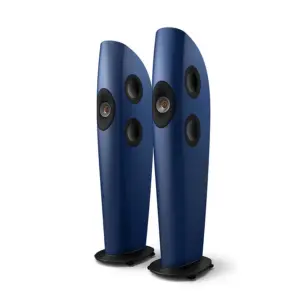
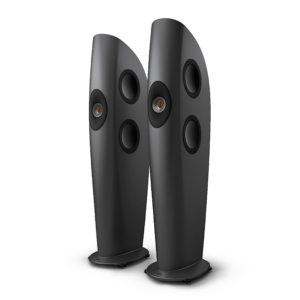
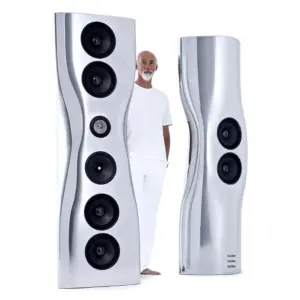
Among KEF floor standing speakers, Blade holds a singular place: KEF calls Blade the world’s first Single Apparent Source loudspeaker, a design in which bass, midrange and treble appear to come from one point. The Blade One Meta and the smaller Blade Two Meta are still built by hand in Maidstone, and the Muon, shaped with the industrial designer Ross Lovegrove, exists in a run limited to one hundred pairs. To compare KEF floorstanding speakers with tall designs from other brands, explore the floorstanding speakers collection.
From a Nissen Hut in Maidstone
KEF takes the name of Kent Engineering and Foundry, on whose site in Maidstone KEF began, in a Nissen hut. The founder, Raymond Cooke, was an electrical engineer from the BBC with a love of music and an appetite for new materials and technology. The first KEF hi-fi loudspeaker, the three-way K1, already used synthetic materials, and KEF audio engineering has kept that spirit through monitor work for the BBC, computer-aided design and the patent behind Uni-Q.
Every pair of KEF loudspeakers here also belongs to the wider hi-fi speakers collection. To hear a KEF speaker before choosing, ask the Audio Lounge team in Wigmore Street about a demonstration.
Questions About KEF
What are the best KEF speakers for my room?
The best KEF speakers for a room depend on the size of the space and on the system around the pair. Without separate components, one of the four wireless pairs is the simplest route. With an amplifier already in place, the passive Q Series, LS50 Meta, R3 Meta and Reference 1 Meta suit most rooms on stands, while the Blade models and the Muon fill larger spaces. Audio Lounge can help narrow the choice.
What is KEF Uni-Q?
KEF Uni-Q is a driver array in which the tweeter is mounted in the centre of the midrange or bass cone, so the whole frequency range radiates from one point and disperses evenly through the room. KEF designed and patented Uni-Q in 1988, describing the design as the world’s first truly coincident source driver. The twelfth generation, paired with MAT, now serves the LS50 Meta and the Q, R, Reference and Blade ranges.
Do KEF wireless speakers need a separate amplifier?
Every KEF wireless pair in the collection has amplification built in. The LS50 Wireless II, for example, drives each tweeter from a 100-watt Class AB amplifier and the bass from a 280-watt Class D amplifier, and streams over AirPlay 2 and Google Cast. Add a phone, a television over HDMI or, on the Coda W, a record player through the phono input, and the system is complete.
Where are KEF speakers made?
KEF has been based in Maidstone, Kent, since the founding in 1961, and new designs are developed there today. KEF states that every speaker in The Reference and the Blade range is still handcrafted in Maidstone, so the Reference 1 Meta and both Blade models in this collection are built in Kent.
Can I hear KEF speakers at Audio Lounge?
Audio Lounge on Wigmore Street, London, welcomes enquiries about hearing a KEF pair before choosing. Name the models of interest, from the Q Series to Blade, and the team can advise on what can be prepared and which amplifier or stands suit the pair.