
An Edition of One Hundred Pairs
Audio Lounge presents the KEF Muon as the rarest loudspeaker KEF has ever built: an edition of one hundred pairs, each cabinet raised by hand at the Maidstone factory where KEF has worked since 1961. Every finished loudspeaker passes through KEF’s anechoic chambers and leaves with a certificate carrying a measured frequency response curve, signed by the craftsman responsible. Ownership begins with a document that belongs to one pair and no other.
Ross Lovegrove and the Shape of Sound
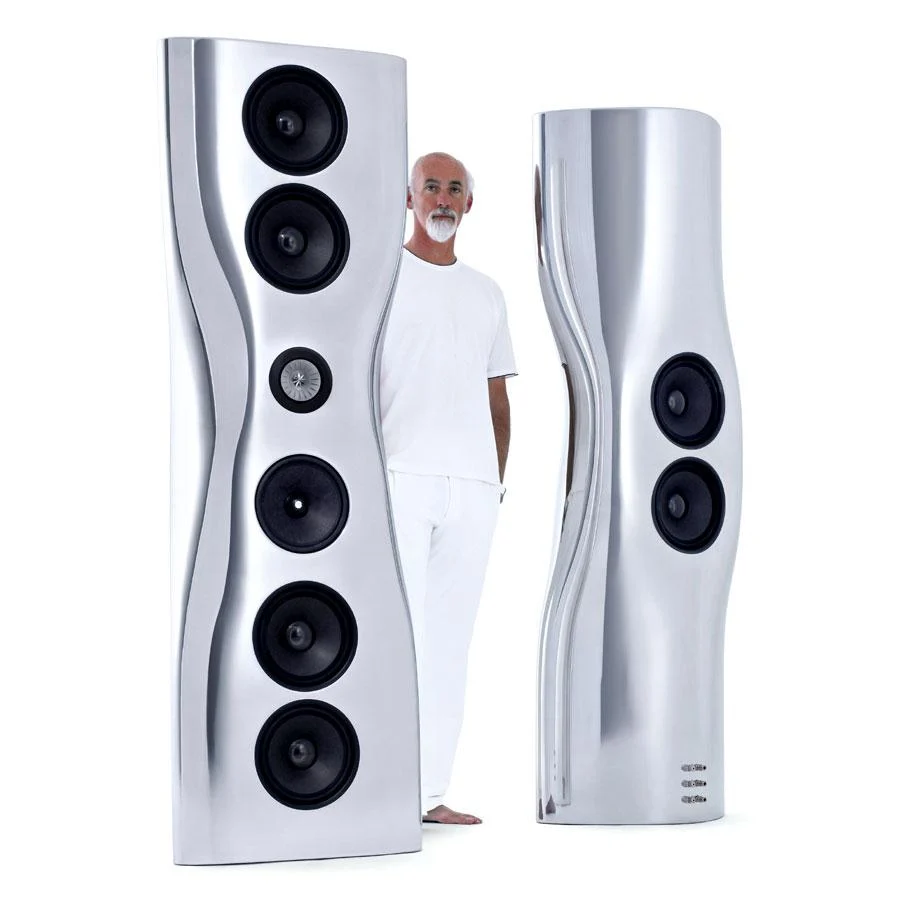
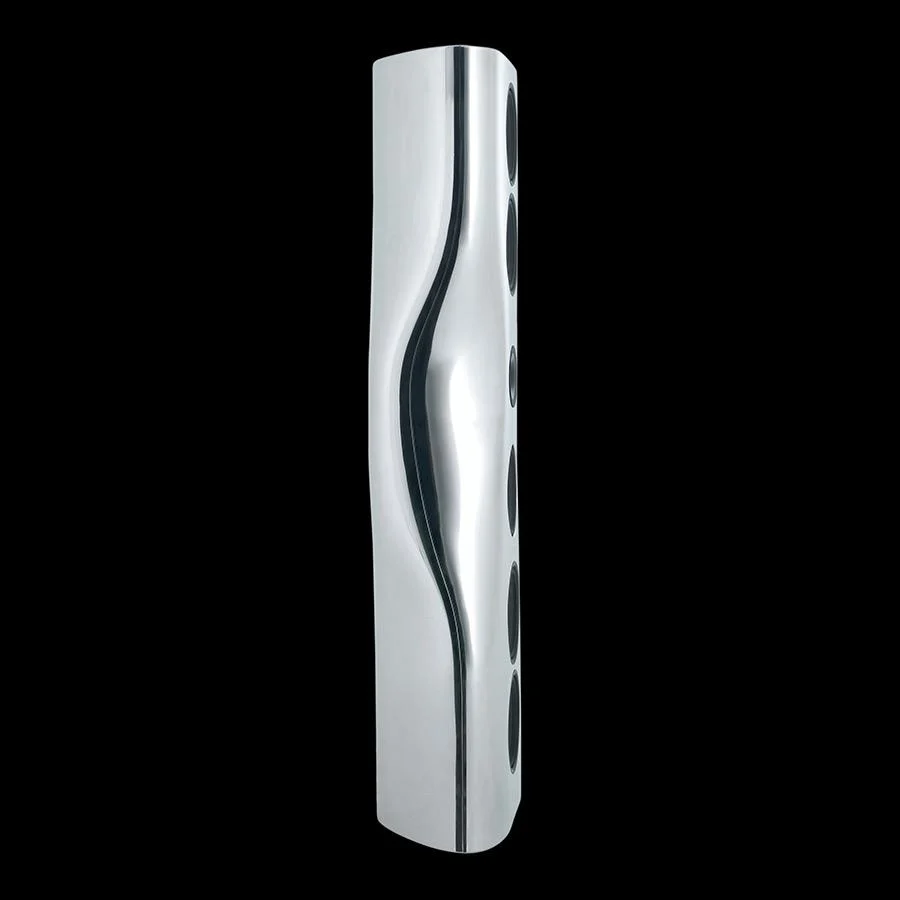
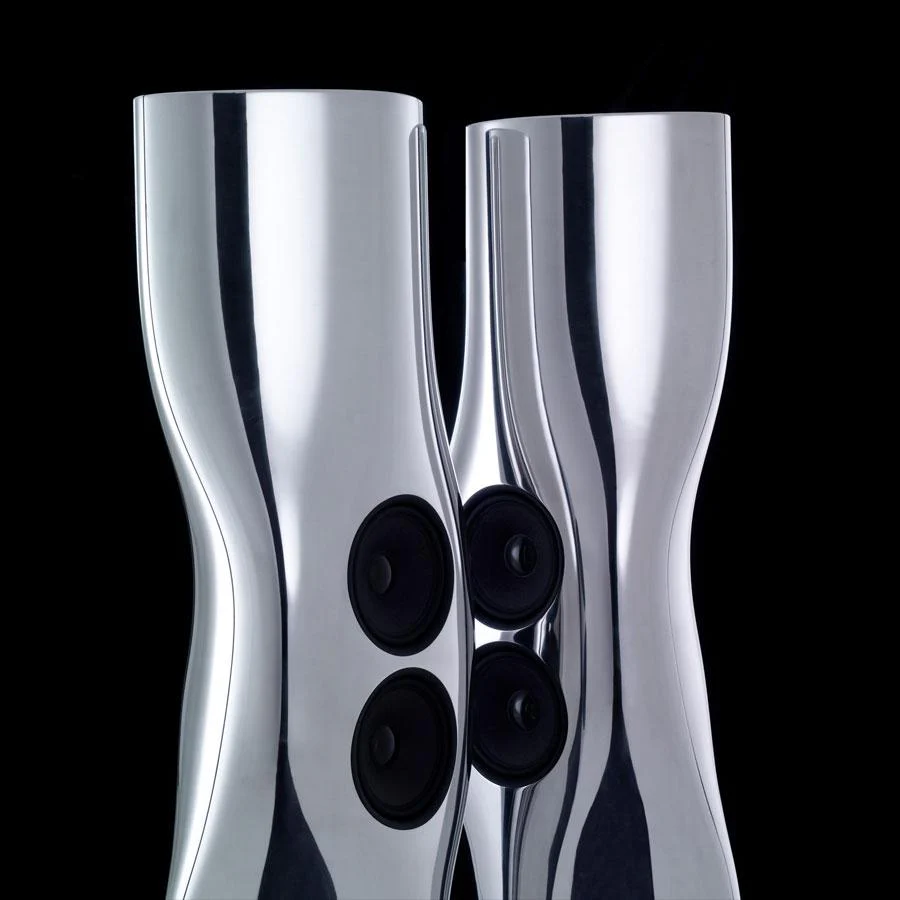
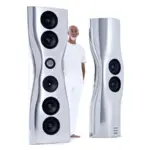
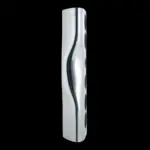
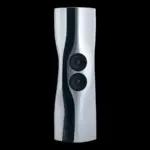
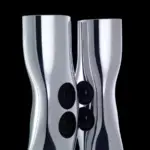
The brief handed to Ross Lovegrove was unusually direct: wrap the finest acoustic engineering KEF could assemble in a form with no wasted gesture. The result stands two metres tall, drawn in continuous curves without a sharp edge anywhere on the surface, and reads from across a room as sculpture rather than audio equipment. Lovegrove has described the process as skinning technology with purposeful form, and the KEF Muon carries that discipline through to the mirror polish.
A Cabinet Raised From Aluminium
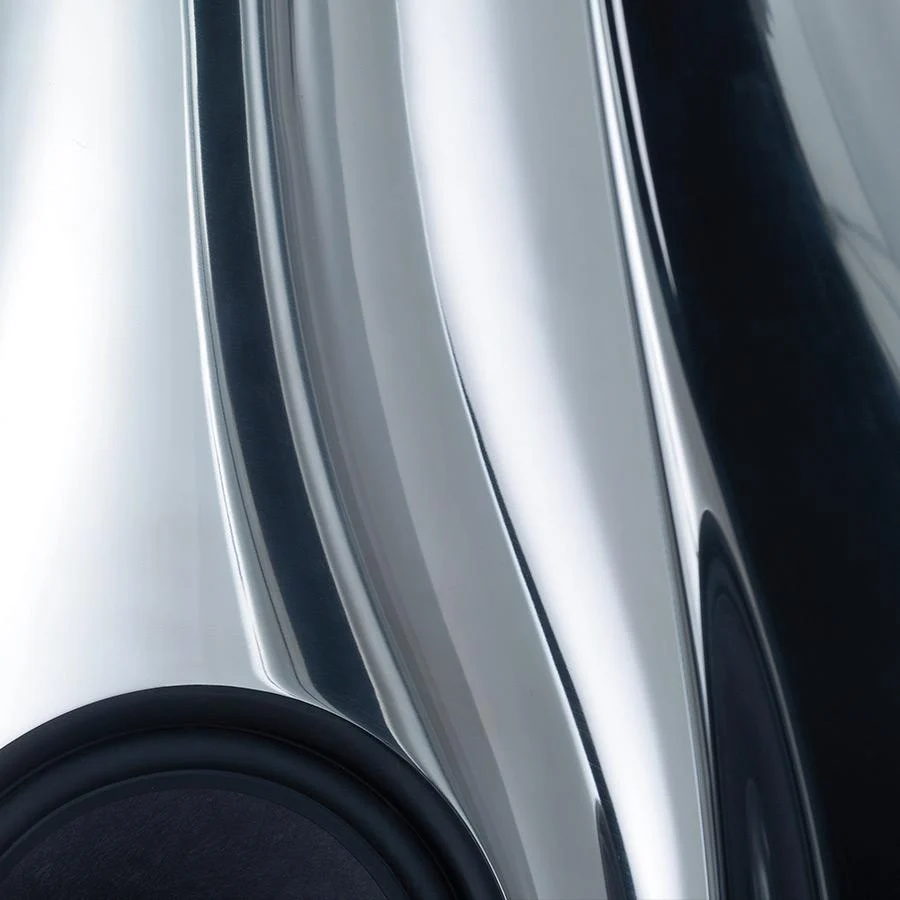
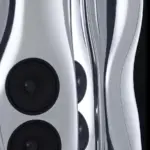
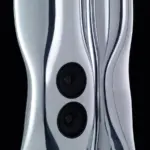
Super-forming heats aluminium sheet until the metal can be drawn into deep compound curves without surrendering stiffness, a process borrowed from aerospace rather than furniture making. The shell that emerges is braced internally and treated with a damping compound, so the structure stays inert while music plays loudly. Nothing about the KEF Muon depends on a rectangular box: enclosure and artwork are the same pressing, finished by hand.
Six Bass Drivers, Facing Front and Back
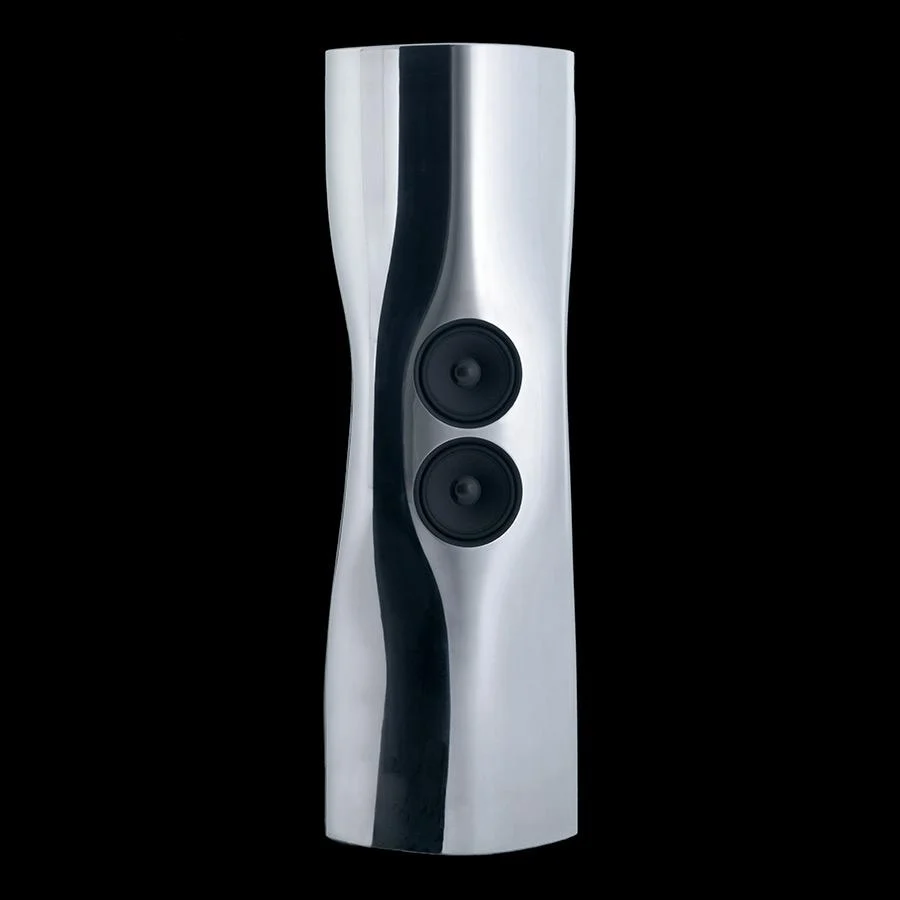
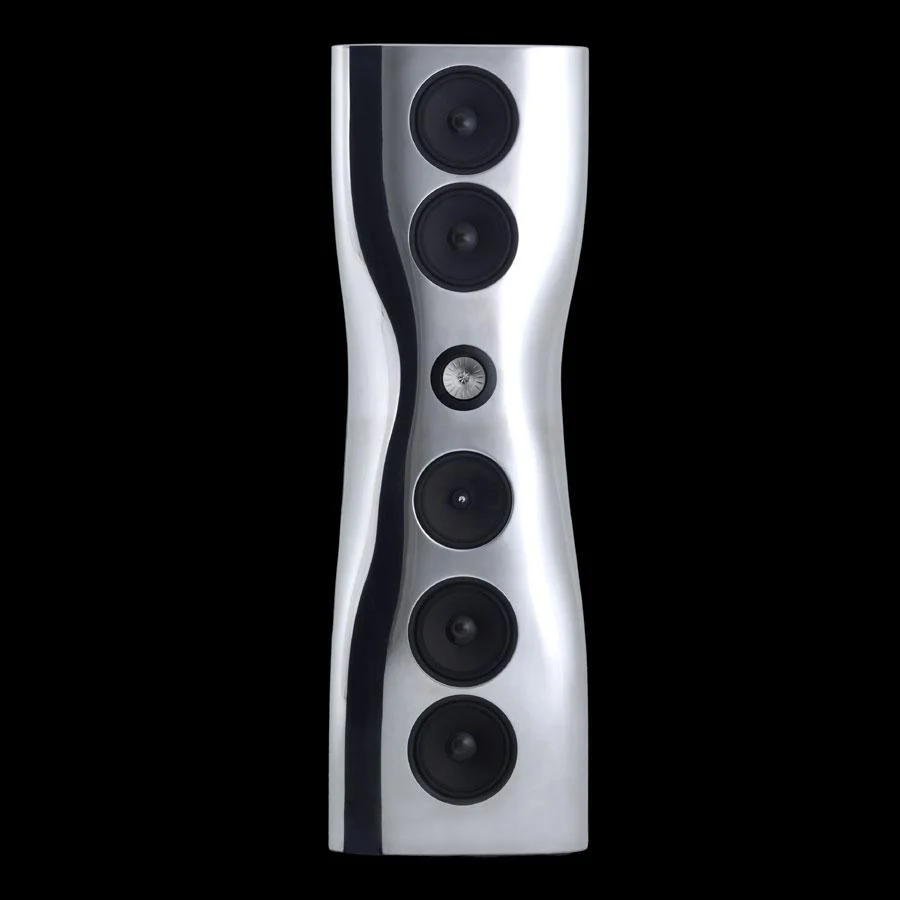
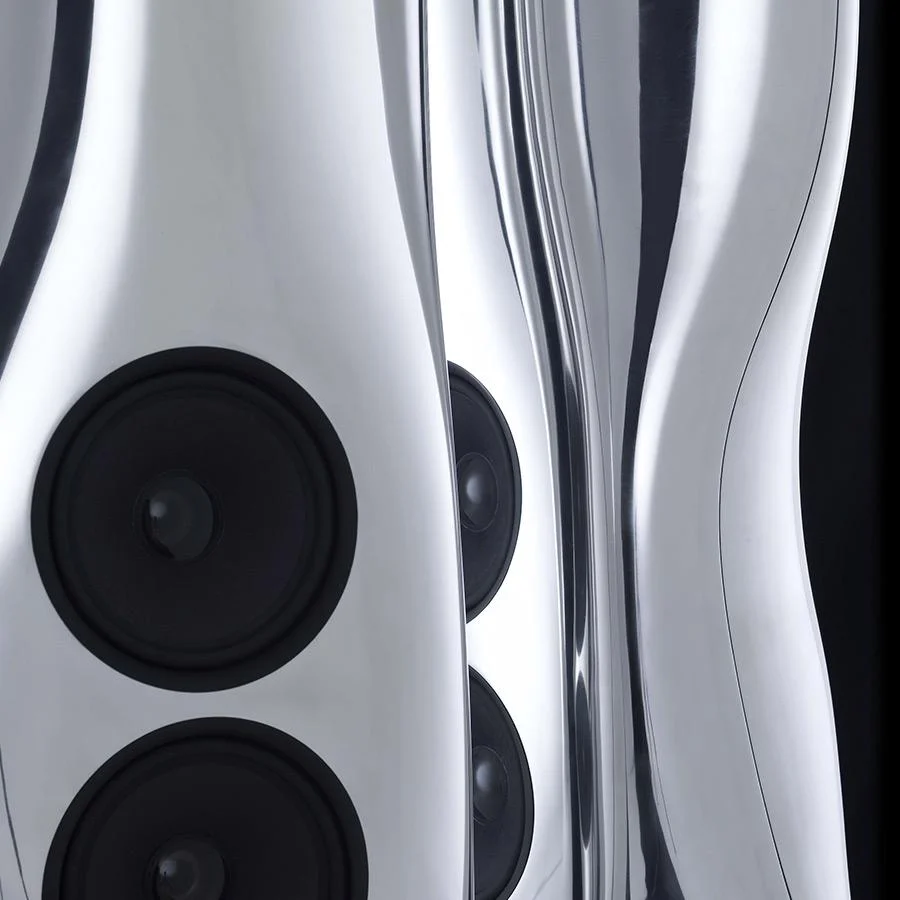
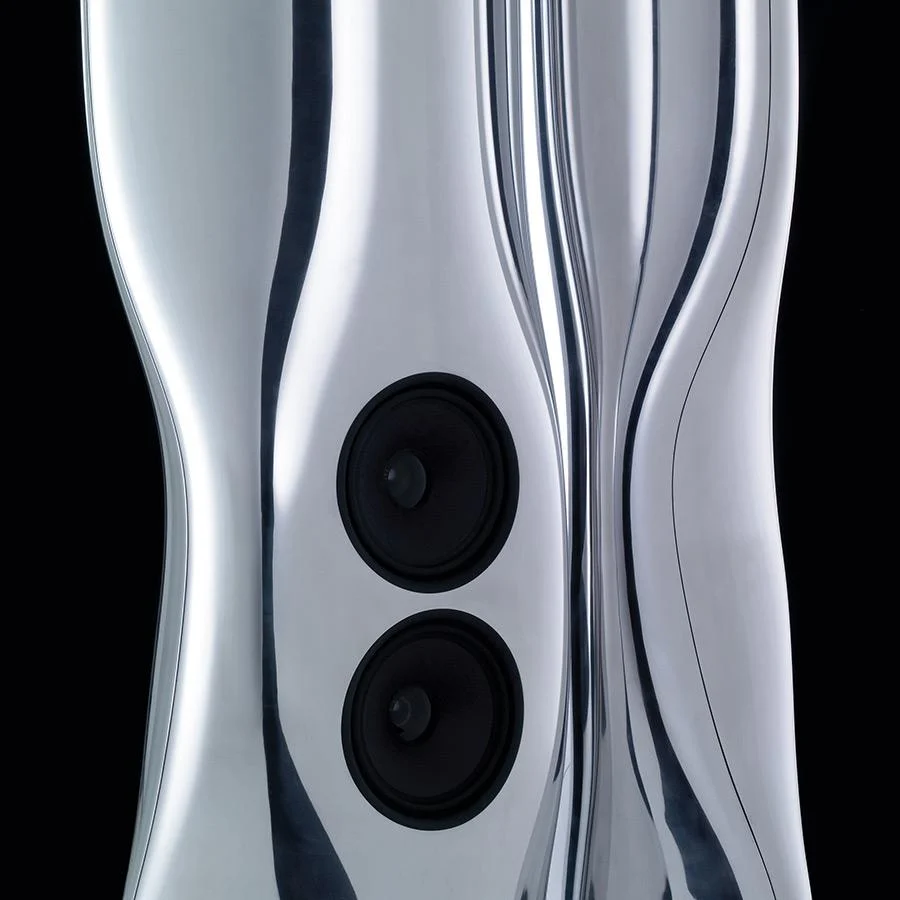
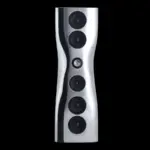
Bass arrives from six drivers in each cabinet. Four face the room and two fire rearward, an arrangement that governs how low frequencies leave the loudspeaker rather than simply adding output. A dedicated lower-midrange driver takes the band above, so the region where voices gather is never asked to share a cone with the lowest octaves. In a large room the effect is weight without pressure, and quiet passages that stay quiet.
Uni-Q and the Question of Where to Sit
KEF’s Uni-Q array mounts the tweeter within the midrange cone, so both radiate from one point in space. Sit away from the centre and the image holds; stand and cross the room and the balance follows. Lovegrove’s curved shell removes the cabinet edges that ordinarily blur that effect, and the KEF Muon dispenses with the single narrow seat that so much high-end audio quietly demands.
Acoustic Compliance Enhancement
Granules of activated carbon fill the sealed enclosures, adsorbing air molecules as internal pressure rises and releasing them as pressure falls. Acoustically the cabinet then behaves as though close to twice the volume, which is how a column of these proportions reaches so far down. KEF developed the technique in-house, and the KEF Muon was among the first designs to carry the benefit into a finished product.
Bandwidth Beyond Hearing
The KEF Muon reproduces information above and below the range the ear registers as pitch. Very low information is felt rather than heard; very high information shapes the sense of air around instruments. Neither shows up on a hearing test, and both contribute to the impression of a performance occupying real space. Recordings that seemed fully explored on smaller loudspeakers tend to give up more.
Living With the KEF Muon
A pair asks for a room with volume to spare, a floor able to carry the mass, and a delivery route agreed in advance. Audio Lounge handles siting, amplifier matching and installation from Wigmore Street, and a private demonstration remains the only honest way to judge a loudspeaker of this kind. Enquiries are welcome from anywhere in the United Kingdom and beyond.
About KEF
KEF began in 1961 in a Nissen hut on the premises of Kent Engineering & Foundry, a metal-working firm on the banks of the River Medway near Maidstone, founded by former BBC engineer Raymond Cooke. Early KEF drive units set broadcast monitoring standards, the Model 104 of 1973 became the first domestic loudspeaker to match a studio monitor, and the Uni-Q array introduced in 1988 still defines the range. Muon, Blade and The Reference are assembled in Maidstone to this day. Audio Lounge holds the wider KEF range at the Wigmore Street showroom, from compact standmounts to the flagship floorstanding models.
Questions About the KEF Muon
What is the KEF Muon?
The KEF Muon is a four-way, closed-box floorstanding loudspeaker designed by Ross Lovegrove and built by KEF as an edition of one hundred pairs. Each cabinet is super-formed from aluminium, stands 2,000 mm tall and weighs 115 kg, carrying six 250 mm bass drivers, a 250 mm lower-midrange driver and a Uni-Q array. Audio Lounge supplies the KEF Muon to enquiry.
How many KEF Muon pairs were made?
KEF limited the Muon to an edition of one hundred pairs. Each loudspeaker is crafted individually at the Maidstone factory, measured in KEF’s anechoic chambers and supplied with a certificate showing a unique frequency response curve, signed by the craftsman responsible. That certificate, rather than a serial number alone, is what collectors treat as provenance.
Are the KEF Muon the most expensive KEF speakers?
Yes. Nothing in the KEF catalogue sits above the Muon, which is formed and finished by hand as a limited edition rather than a production model. Within the current range the Blade One Meta leads KEF’s flagship floorstanding models, and Audio Lounge can arrange a comparison of both designs in London.
What is super-formed aluminium?
Super-forming heats aluminium sheet until the metal can be stretched into deep compound curves without losing rigidity, a technique drawn from aerospace manufacturing. The KEF Muon shell is 6 mm thick, braced internally and coated with a damping compound, so the enclosure stays inert at high volume and presents no sharp edge to scatter sound.
What does Acoustic Compliance Enhancement do?
Acoustic Compliance Enhancement, or ACE, fills the sealed enclosures with granules of activated carbon. The granules adsorb air molecules as internal pressure rises and release them as pressure falls, so the cabinet behaves acoustically as though close to twice the volume. Low frequencies consequently reach further down than the physical dimensions of the KEF Muon would suggest.
How does Uni-Q change where you can sit?
KEF’s Uni-Q array mounts a 25 mm vented aluminium dome tweeter inside a 125 mm midrange cone, so both radiate from a single point in space. Dispersion is wide and even, which frees the stereo image from the central seat. Lovegrove’s curved shell removes the cabinet edges that would otherwise scatter the tweeter output.
How much amplifier power does the KEF Muon need?
KEF specifies 100 to 400 W as typical, into a 4 ohm nominal load with 90 dB sensitivity. Headroom matters more than raw output at this level: a stable, high-current design will control six bass drivers per cabinet far better than a nominally powerful but lightly built amplifier. Audio Lounge advises on matching before purchase.
How large are the KEF Muon speakers?
Each cabinet measures 2,000 mm high, 600 mm wide and 380 mm deep, and weighs 115 kg. The KEF Muon speakers need a room with height and volume to breathe, a floor able to carry the mass, and a delivery route planned in advance. Audio Lounge surveys the room and the access before installation is booked.
Where should Muon speakers be placed?
Muon speakers work best well clear of the rear wall, since two of the six bass drivers in each cabinet fire rearward and rely on that space to control low-frequency directivity. Toe-in is usually slight, because the Uni-Q array already spreads the image widely. Final positioning is set by ear during installation.
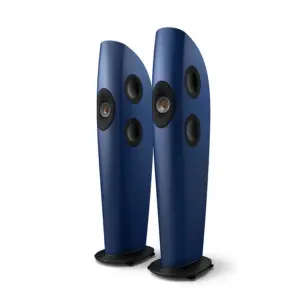
How does the KEF Muon compare with the Blade One Meta?
Scale and rarity separate the two designs. Leading KEF’s current production range, the Blade One Meta pairs four force-cancelling bass drivers with a metamaterial absorber behind the tweeter, in eight standard finishes. The KEF Muon predates that absorber and answers a different brief: a four-way array inside a hand-formed aluminium edition of one hundred pairs, larger in every dimension and built in far smaller numbers.