



The Element Series at Full Scale
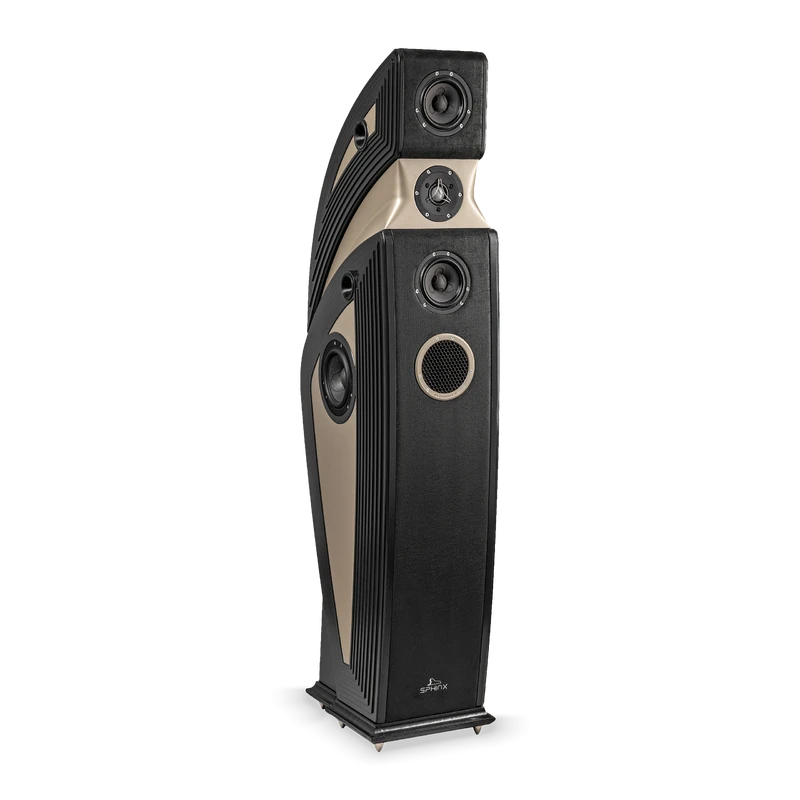
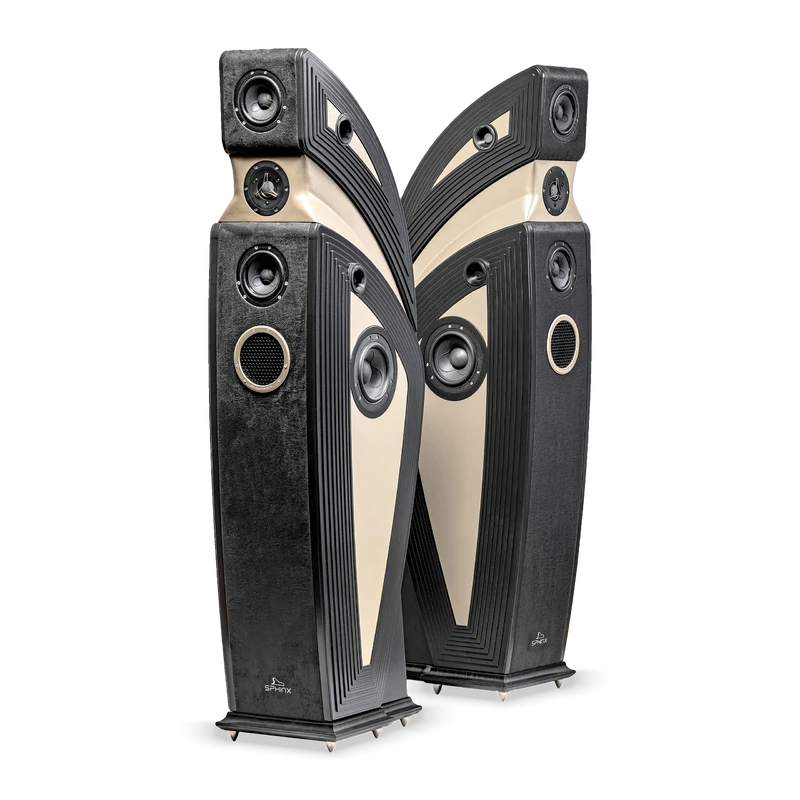
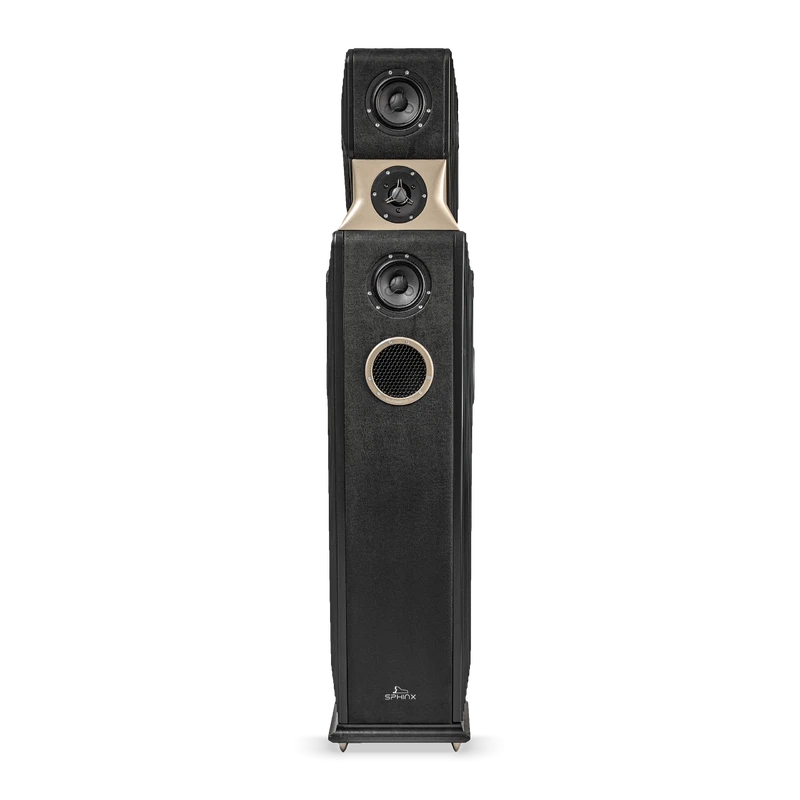
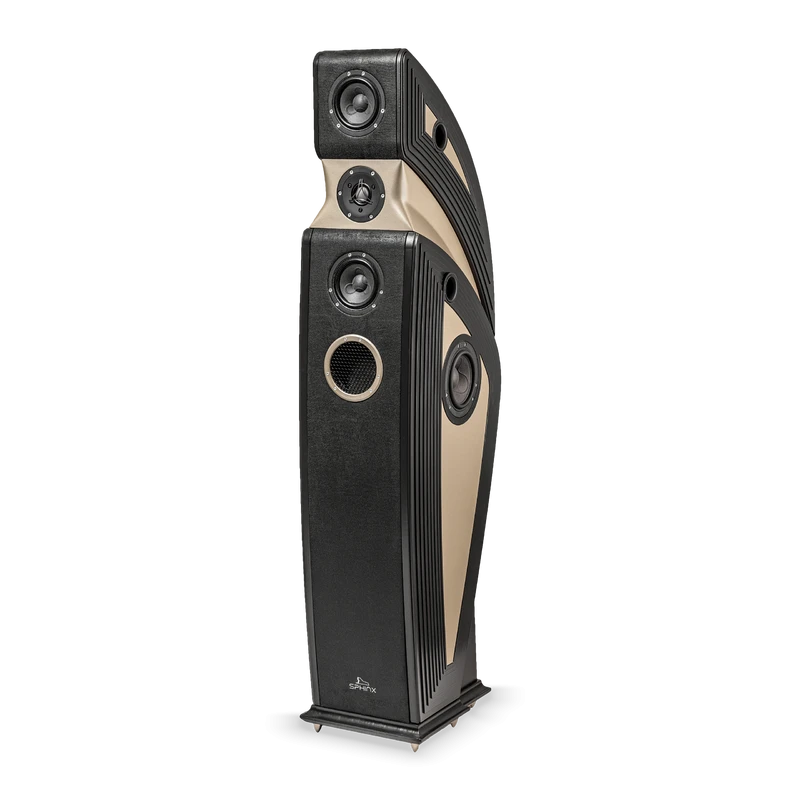
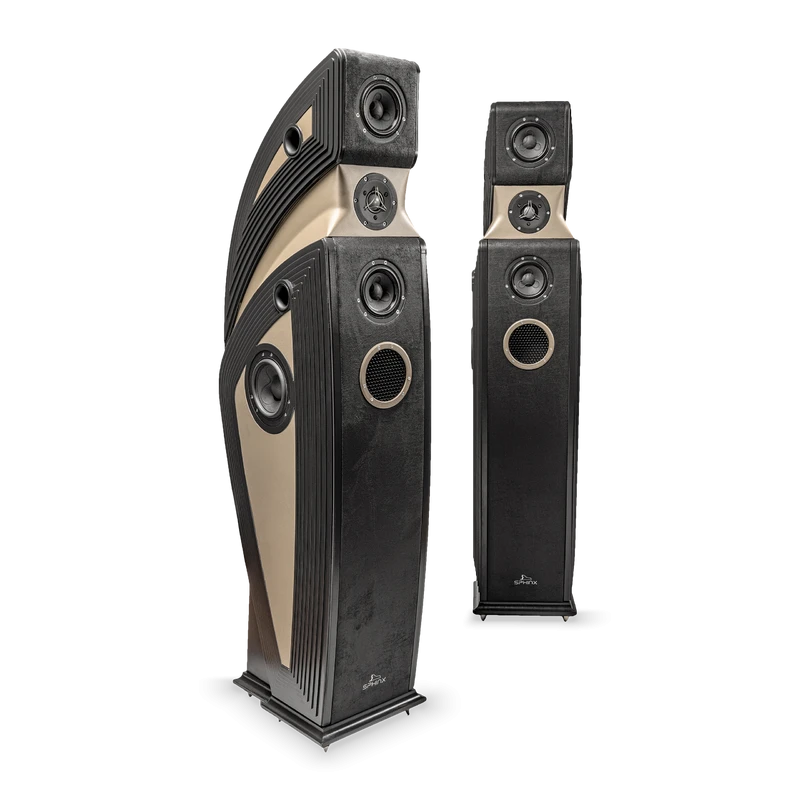
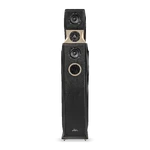
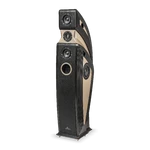
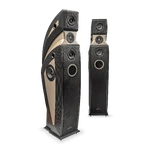
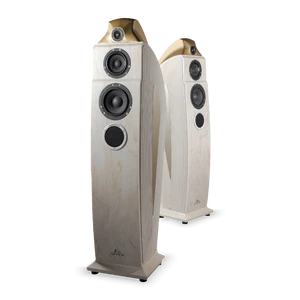
As the flagship of the Element Series, the Sphinx Element 5 is a three-way floorstander conceived for greater scale, deeper bass and a more commanding sense of space. Sphinx calls the Element 5 the larger and more ambitious expression of the Element concept, built as one complete acoustic system rather than a collection of parts, and the coherence and natural voice that define the range carry through unchanged.
Every Element 5 is hand-assembled, wired with Sphinx’s Silver-Gold conductors and given final acoustic tuning in the Netherlands. The pair comes in a single finish, Midnight Grey, and Audio Lounge welcomes enquiries for an audition in the Wigmore Street showroom, ideally with the amplifier that will drive the pair at home.
Two Woofers, Back to Back
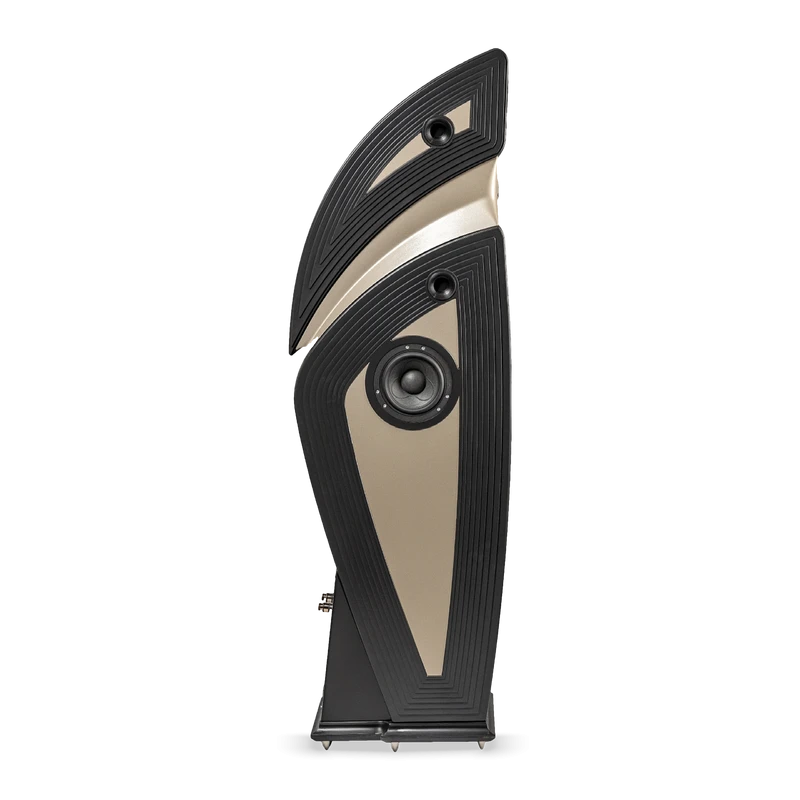
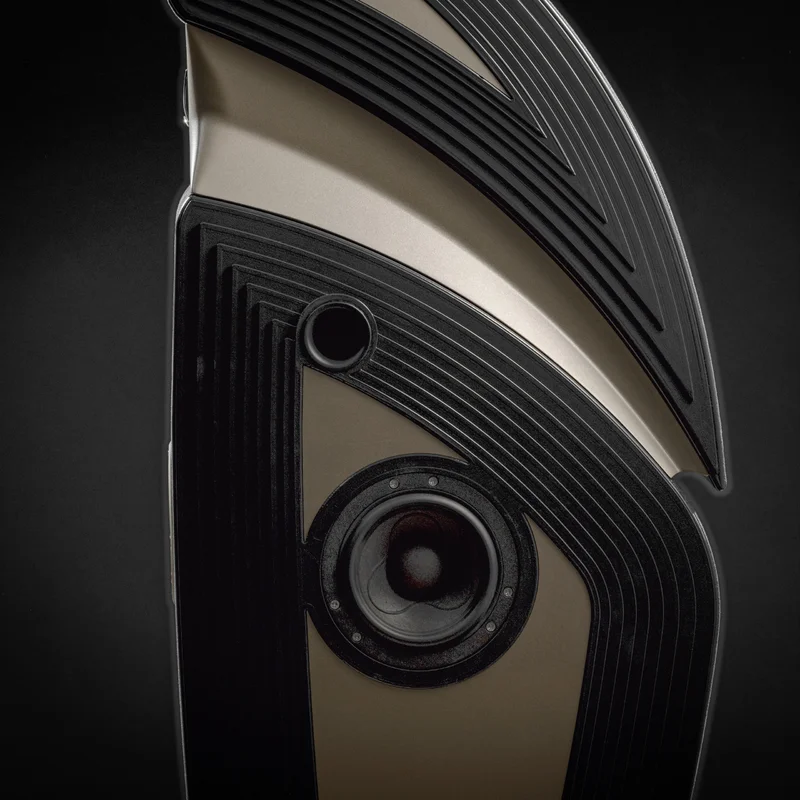
The bass begins with a pair of woofers mounted back to back. Working in opposition, the two drivers cancel the forces that would otherwise set the cabinet in motion, and Sphinx reports a significant fall in mechanical vibration as a result. What remains is bass with composure: weight that arrives cleanly and stops on cue, without the blur of a cabinet joining in.
Sphinx counts the bass system among the defining achievements of the Element 5, and the arrangement explains how the flagship sounds authoritative without sounding heavy. Power comes with control, and the low end stays as articulate as the midrange above.
A Transmission Line in Two Channels
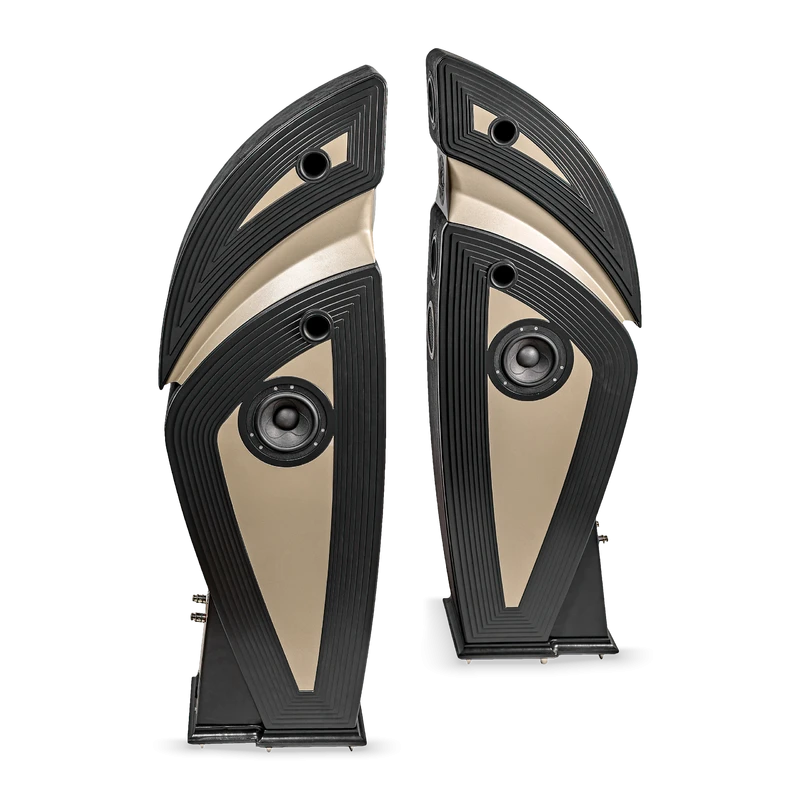
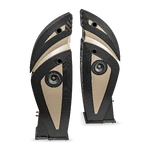
The woofers work into Zero Gravity Bass, the acoustic channel that gives the Element Series a silhouette drawn from a harp. A conventional cabinet captures the rear wave of a bass driver and absorbs the energy. Sphinx chose to delay that wave and align the wave in phase with the front output, so the two reinforce each other while air compression and distortion stay low.
In the Element 5 the principle becomes a dual-channel transmission-line structure, tuned for deep extension, controlled group delay and a more even relationship with the room. Bass from the flagship carries real power, yet sounds spacious and naturally woven into the music rather than laid beneath the melody.

In a world of very similar loudspeakers, this one offers something genuinely new and exciting.
Beryllium Between Two Midranges
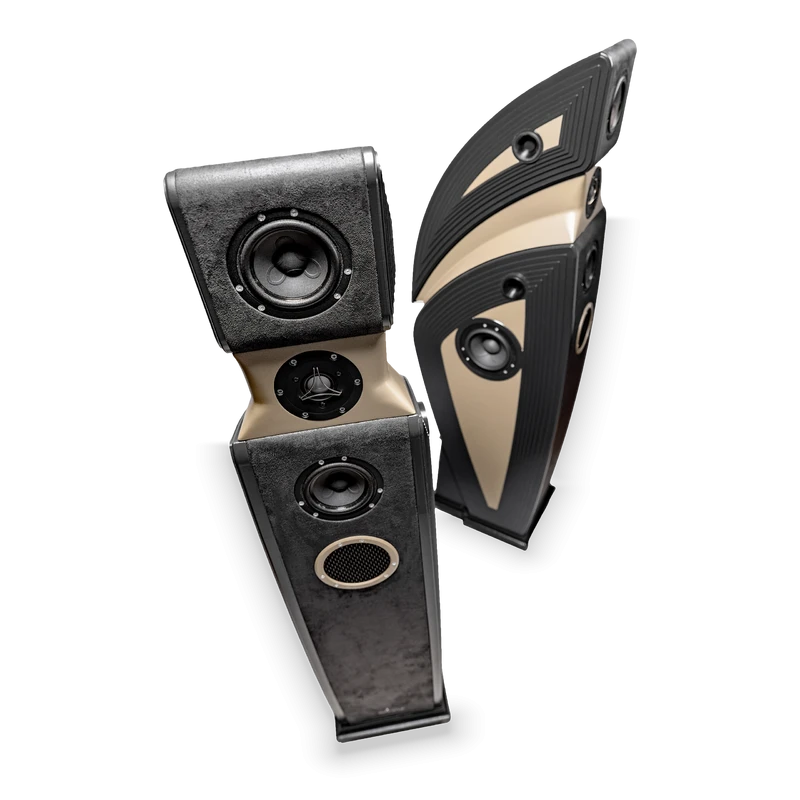
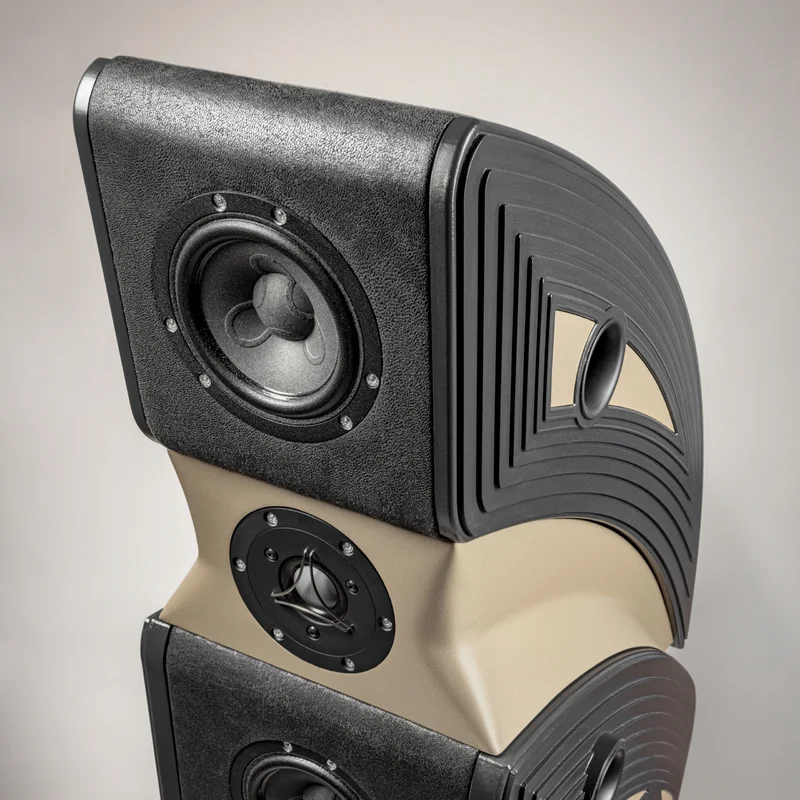
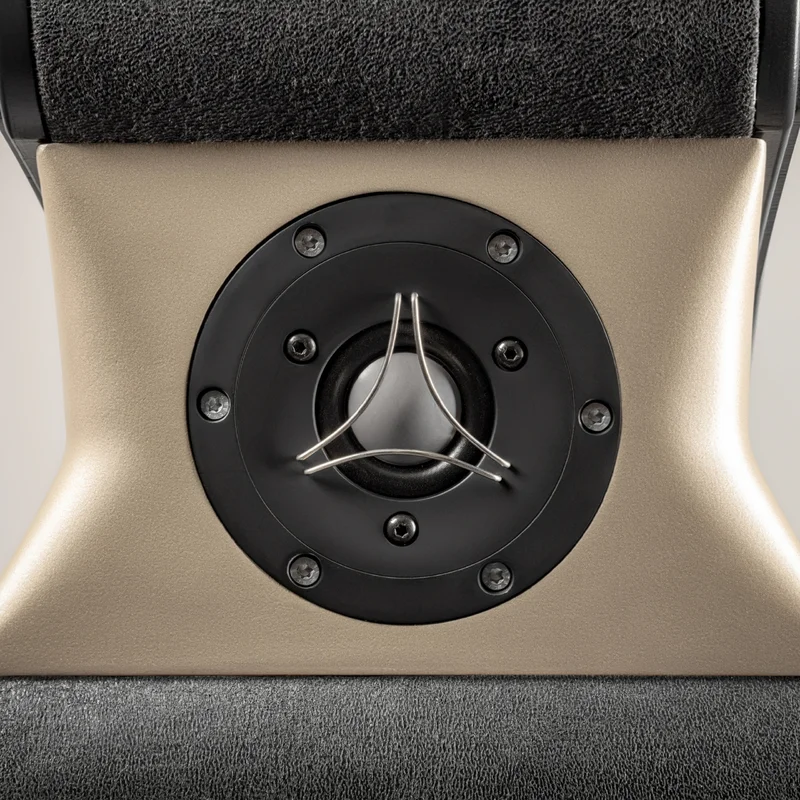
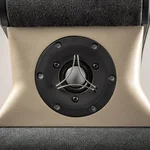
Above the bass, two midrange drivers frame a beryllium dome tweeter in a midrange, tweeter, midrange arrangement, and each midrange breathes through a dedicated ported chamber. Instead of boxing the midband in or damping the life out of the vocal range, Sphinx lets voices open up, so singers sound airy and unforced and the soundstage spreads wide and holographic.
The symmetry pays off in focus. Images hold firmly in place, dispersion stays stable, and the beryllium tweeter, set in a sealed chamber, carries the treble with clarity and air.
Power Steering for Every Driver
The Element 5 carries the power-assisted crossover, the defining idea of the Element Series, here as a hybrid network Sphinx calls PAC. From the outside, nothing changes: the amplifier meets what behaves like a conventional passive loudspeaker with a high, steady load, and the usual path from source through preamplifier and power amplifier to loudspeaker remains untouched.
Inside, a balanced analogue filter, built without inductors, divides the signal at low power, local buffer stages follow, and a dedicated Class D module drives each speaker unit. Sphinx compares the idea to power steering: the external amplifier still steers and gives the system a voice, and the onboard stages provide the effort. Tuned for phase coherence and close driver integration, the hybrid network keeps the presentation precise and natural at any volume.
Sculpted for Scale
Sphinx drew the cabinet from the silhouette of a harp, and form follows function: the curves enclose the bass channel, a carefully engineered internal structure controls the enclosure, and the larger cabinet gives the flagship room for greater scale and dynamic authority. Resonance is tamed by a stone-like exterior, so the enclosure stays quiet while the music grows.
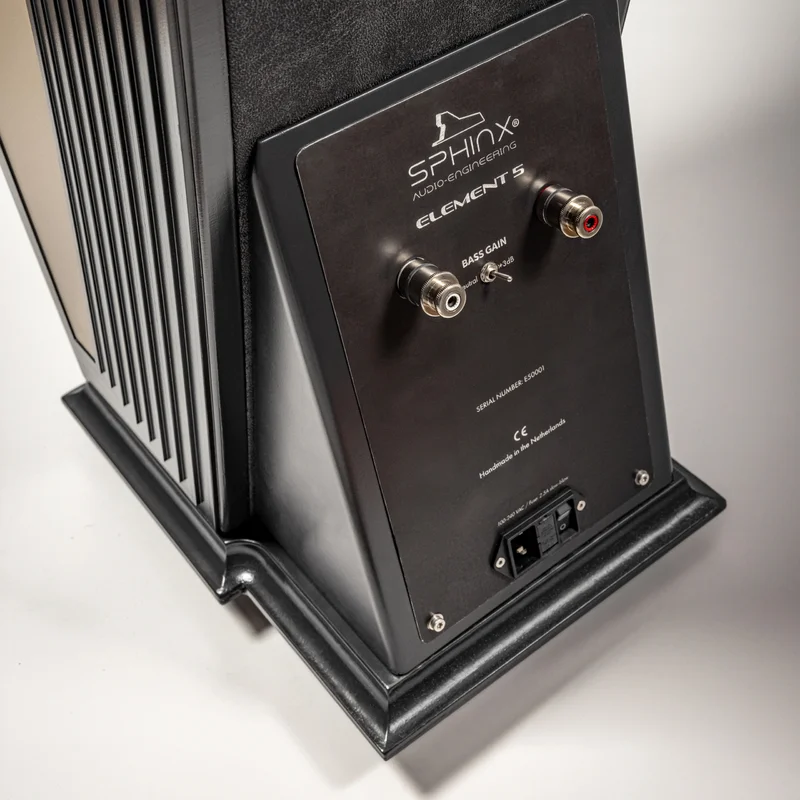
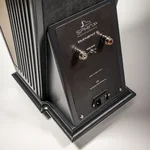
Beneath the cabinet, a curved aluminium base provides stability and helps dissipate heat, and the elegant form settles naturally into a refined interior. On the rear panel, a bass gain switch adds extra weight for rooms that absorb low frequencies, leaving the midrange and treble untouched.
Choosing Within the Element Series
The Sphinx Element 3 distils the same philosophy into a more compact cabinet with one woofer, one midrange and a textile dome tweeter. The Element 5 adds a second woofer, the force-cancelling bass system, twin midrange chambers and the beryllium tweeter, asking more of the amplifier in return for deeper reach, larger scale and a more expansive acoustic presentation.
Both models draw on the knowledge of the team that created the Crystal Cable Minissimo Forte and the Siltech Symphony, and Sphinx has shown the Element 5 in public with Siltech SAGA amplification. Audio Lounge’s wider selection of floorstanding speakers offers further points of comparison.
About Sphinx
Sphinx has belonged to the Siltech family from the very start. In the 1980s and 1990s the name stood for a broad family of high-end electronics, admired across Europe and Asia, produced by Siltech as the work of Edwin van der Kley-Rynveld, who leads what has since grown into the Siltech Group. The team around him went on to build Siltech’s SEPA and SAGA amplifiers, the Pantheon and Symphony loudspeakers, and Crystal Cable’s Glass Arabesque and Minissimo Forte. Now reborn, the name gathers that experience, with the heritage of HMS Elektronik, into a new generation of loudspeakers, with electronics and more to come. The Element 3 and Element 5 arrived together as the opening chapter, both assembled by hand in the Netherlands. Audio Lounge presents the full range in the Sphinx collection, with demonstrations on enquiry.
Questions About the Sphinx Element 5
What is the Sphinx Element 5?
The Sphinx Element 5 is the flagship three-way floorstanding loudspeaker of Sphinx’s Element Series, sold as a pair. Two woofers mounted back to back drive Zero Gravity Bass, a dual-channel transmission line, while two midrange units flank a beryllium dome tweeter. Through a power-assisted crossover, every driver is powered by a dedicated amplifier module. Hand-built in the Netherlands, the pair is driven by a conventional external amplifier.
What are the main specifications of the Sphinx Element 5?
A three-way system: a 29mm beryllium dome tweeter between two midrange units in ported chambers, and two woofers back to back. Sensitivity is 95dB for 1 watt (2.83 volts) at 1 metre, and the load is 16 ohms nominal, never below 14 or above 17. Bass reaches 22Hz (f10); the 3dB window spans 33Hz to 40kHz, with distortion below 0.5%. The cabinets stand 1356mm high, 282mm wide and 425mm deep, at 66.2kg each.
Which amplifiers suit the Sphinx Element 5?
Capable conventional designs, valve or solid-state. For a valve amplifier, Sphinx recommends 60 watts per channel or more into 16 ohms; for solid-state and digital designs, 150 watts or more into 8 ohms, or 75 watts into 16 ohms. Sphinx describes the Element 5 as far friendlier to amplifiers than many loudspeakers in the class, and has demonstrated the pair with Siltech SAGA. Audio Lounge can suggest further power amplifiers and arrange a demonstration.
How do transmission-line speakers work?
By guiding the rear wave of the bass driver through a channel instead of trapping that energy in a box. In the Sphinx Element 5, Zero Gravity Bass develops the idea: a pair of force-cancelling woofers feeds a dual-channel transmission line, which delays the rear wave and aligns that energy in phase, so the low end is strengthened rather than smothered. Sphinx tuned the line for deep reach, controlled timing and even behaviour in the room.
Does the Sphinx Element 5 need mains power?
Yes, alongside the amplifier. The external amplifier connects to a single pair of terminals and sees a passive loudspeaker with a nominal 16 ohm load, yet inside the Sphinx Element 5 the PAC crossover splits the signal at low level, without inductors, and feeds every driver through a dedicated Class D amplifier module. The rear panel therefore carries a mains inlet with a power switch, below the bass gain switch.
Why does the Sphinx Element 5 use two woofers back to back?
To cancel vibration at the source. Mounted back to back, the two woofers of the Sphinx Element 5 move in opposition, so the forces each would pass into the cabinet cancel out. Sphinx says the force-cancelling arrangement significantly reduces mechanical vibration while improving composure and bass authority, and the woofers work with the dual-channel transmission line to deliver bass that is deep and controlled yet spacious.
What does the bass gain switch on the Sphinx Element 5 do?
The switch lifts the bass by 3dB. Set on the rear panel of the Sphinx Element 5 and marked Neutral and +3dB, the toggle adjusts the low end by changing gain, so a room that absorbs low frequencies can be given more substance without altering Sphinx’s voicing elsewhere. The best position for a given room is easy to judge during a demonstration at Audio Lounge.
Which suits a room better, the Sphinx Element 5 or the Element 3?
Room size and amplifier decide the choice. The Sphinx Element 5 is the larger flagship, 1356mm tall and 66.2kg per cabinet against 1082.6mm and 56.4kg, with twin woofers, twin midranges and a beryllium tweeter, and bass to 22Hz (f10) against 25Hz. The Sphinx Element 3 is more sensitive, at 98dB against 95dB, and content with 20 watts of valve power where the Element 5 asks for 60.
What has the press said about the Sphinx Element 5?
Hi-Fi+ reviewed the Sphinx Element 5 at length in the March 2026 issue, and a line from Alan Sircom’s verdict is quoted here, with a link to Sphinx’s reprint of the full review. At HIGH END Vienna 2026, the Siltech Group demonstration system built around the Element 5 received one of the six Dragon of the Exhibition awards given by the Polish magazine High Fidelity.
Where can the Sphinx Element 5 be auditioned?
At Audio Lounge, by arrangement, in the Wigmore Street showroom. Enquiries to hear the Sphinx Element 5 are welcome, and the session works best with the amplifier and sources already in use at home, with advice on positioning in the room and on partnering electronics and cables.