

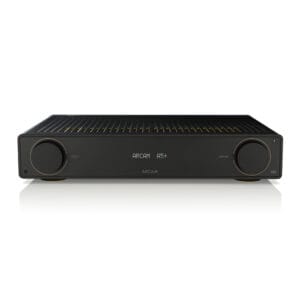
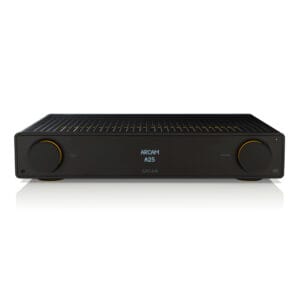
A Cambridge Amplifier Built on Half a Century of Practice
Amplification is the discipline ARCAM was founded on — the company name carries the initial to this day. Fifty years of continuous practice stretch back to the A&R Cambridge A60 of 1976, a modest British integrated amplifier that went on to define what an affordable component could achieve, and the thread has never been dropped since. The ARCAM A15+ arrives as the most recent expression of that lineage — a Radia-series design drawn in Cambridge, refined rather than reinvented, and developed by an engineering team that treated the award-winning ARCAM Radia A15 as a starting point rather than a finish line.
What changed is substantial. An enhanced power supply design sits behind the audio circuitry, and the wireless specification has been brought fully up to date. The result handles a wider range of loudspeakers, a wider range of sources and a wider range of rooms than the model before.
Eighty Watts That Change What Loudspeakers Can Do
Class AB amplification delivers a full 80 watts per channel, and the figure understates the experience. Floorstanding loudspeakers that sound polite on a smaller amplifier find their footing. Orchestral crescendos build without hardening. A large room stops swallowing the bottom octave. The ARCAM A15+ was conceived for exactly those circumstances — tower loudspeakers, generous spaces and listening levels that would leave a lesser design short of breath.
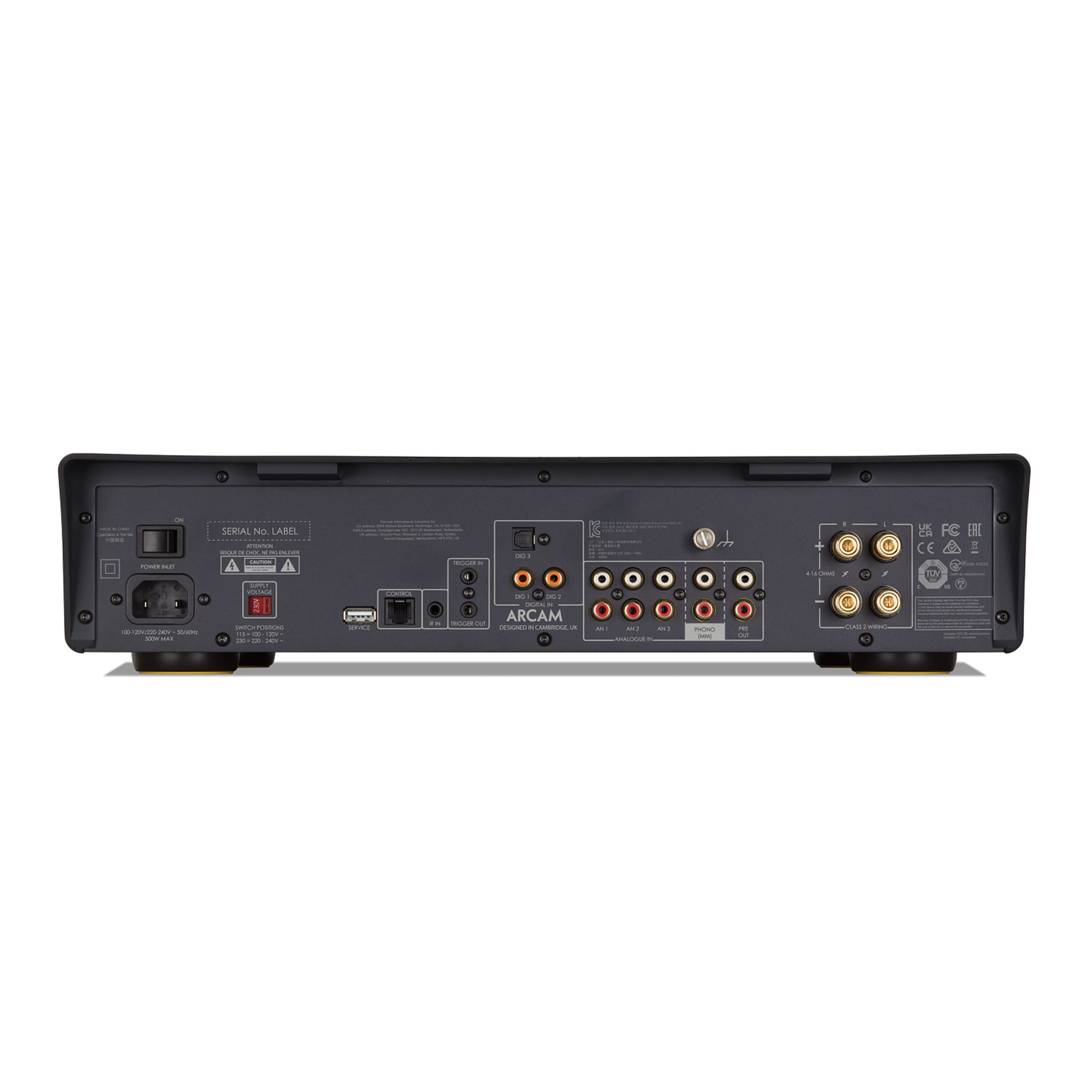
A pre-amplifier output stands ready should a system grow toward separate power amplification or an active subwoofer.
The Television Becomes a Proper Source
An HDMI eARC/ARC input is the single most useful addition here, and the reason the ARCAM A15+ integrated amplifier suits a living room rather than a dedicated listening room alone. One cable from the television carries sound directly to the amplifier, the television remote continues to control volume, and the loudspeakers already in the room take over from the screen’s own drivers.
Anyone shopping for an integrated amplifier with HDMI ARC understands the appeal. Film dialogue gains body. Live broadcasts acquire scale. A drama series stops sounding like a laptop. Because the same loudspeakers serve both duties, there is no second system to accommodate, no soundbar to hide and no compromise between music and screen.
Coaxial and optical digital inputs sit alongside the HDMI socket, every one of them routed through the ESS ES9018K2M converter that handles digital duties across the Radia Plus range.
A Phono Stage Tuned for Records
Plenty of manufacturers add a moving magnet input and consider the job done. ARCAM took a different view. The phono stage in the A15+ was tuned by ear as well as by instrument, voiced around the loading that moving magnet cartridges are designed to see, so records arrive with their timing and colour intact.
An integrated amplifier with phono stage of this quality removes an entire box from the equation. A turntable connects directly, a dedicated earth post takes the ground lead, and vinyl is given the detail and momentum that make the format worth the trouble in the first place.
Wireless Audio Without the Usual Compromise
Bluetooth on most equipment means accepting a lossy signal and calling the convenience worth the cost. The ARCAM A15+ declines the bargain. Snapdragon Sound carries digital audio wirelessly without compression, and aptX Lossless support means a phone or tablet becomes a legitimate source rather than a concession reserved for background music.
For anyone seeking an integrated amplifier with Bluetooth that treats the wireless input as seriously as the wired ones, the distinction is audible from the first track.
Auracast and the Shared Session
Auracast is the more unusual capability, and one of the genuinely new arguments for the ARCAM Radia A15+ over what came before. Rather than pairing a single set of headphones, the amplifier broadcasts to several compatible headphones or wireless loudspeakers at once, with no pairing procedure at all.
Two people can follow the same record in a quiet house. A second space can join without cabling. Guests can connect their own headphones to a shared session. The standard is new enough that compatible receiving equipment is still reaching the market, which makes the ARCAM A15+ an amplifier bought partly for where audio is heading.
Headphones at Full Strength
The headphone output was engineered rather than included. High-impedance planar and dynamic designs that go limp on a typical amplifier’s afterthought socket receive genuine authority here, with reserves to spare for the most demanding models.
Late-night listening stops being a downgrade. The same sources, the same converter and the same care simply arrive through a different transducer.
Aluminium, Weight and the Feel of the Controls
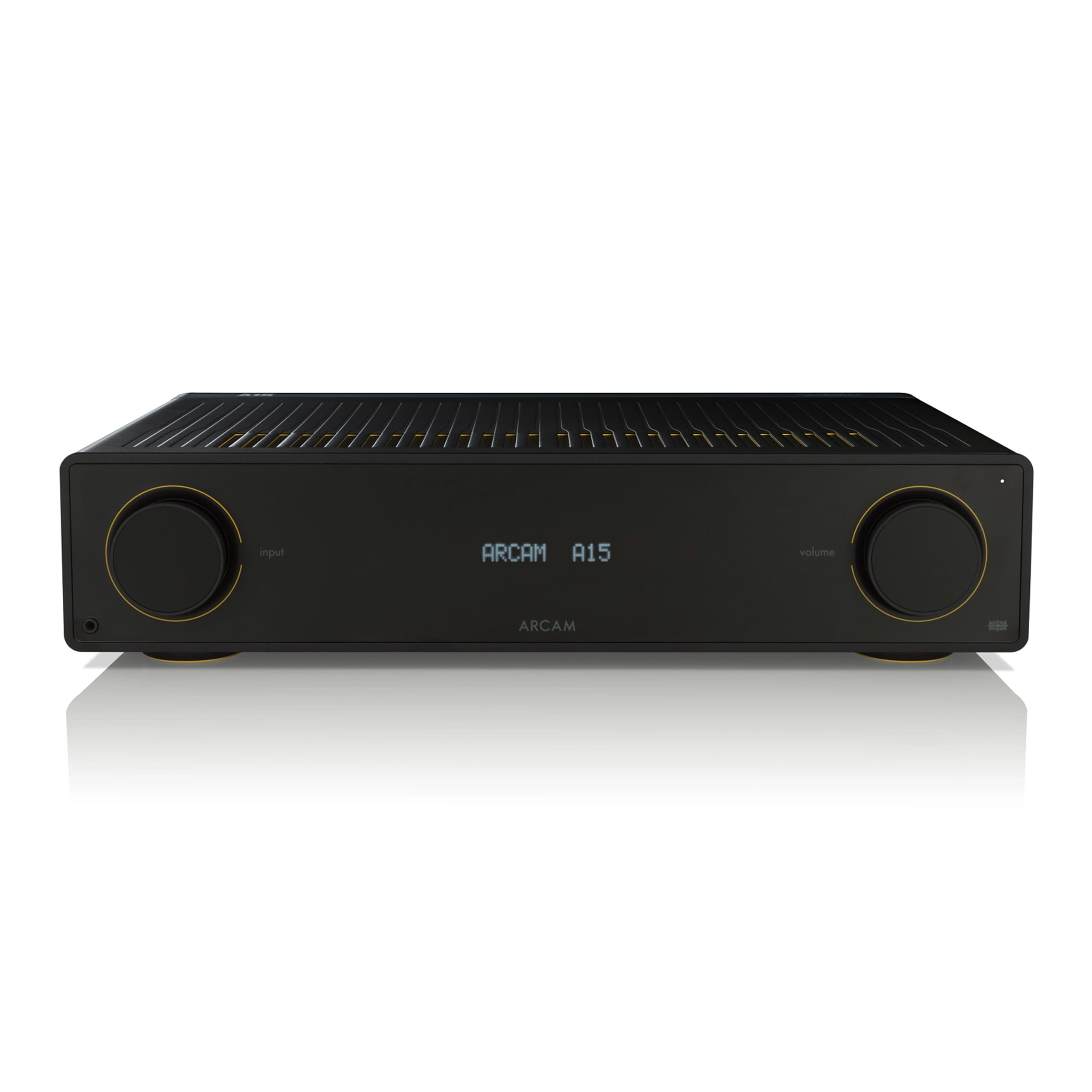
The A15+ is built from aluminium at the front, top, sides and rear, with solid aluminium dials rather than plated plastic. Ten kilograms of amplifier communicates intent before a note is played — the density that suppresses resonance and the presence that suits good furniture.
The controls reward use. A rotating input carousel selects sources and, held down, renames them, so the display reads TURNTABLE or PROJECTOR rather than AN 1. The volume dial mutes with a push and drops the amplifier into standby when held. A compact remote handles the rest. Packaging is entirely plastic-free.
Building a System Around the Radia Range
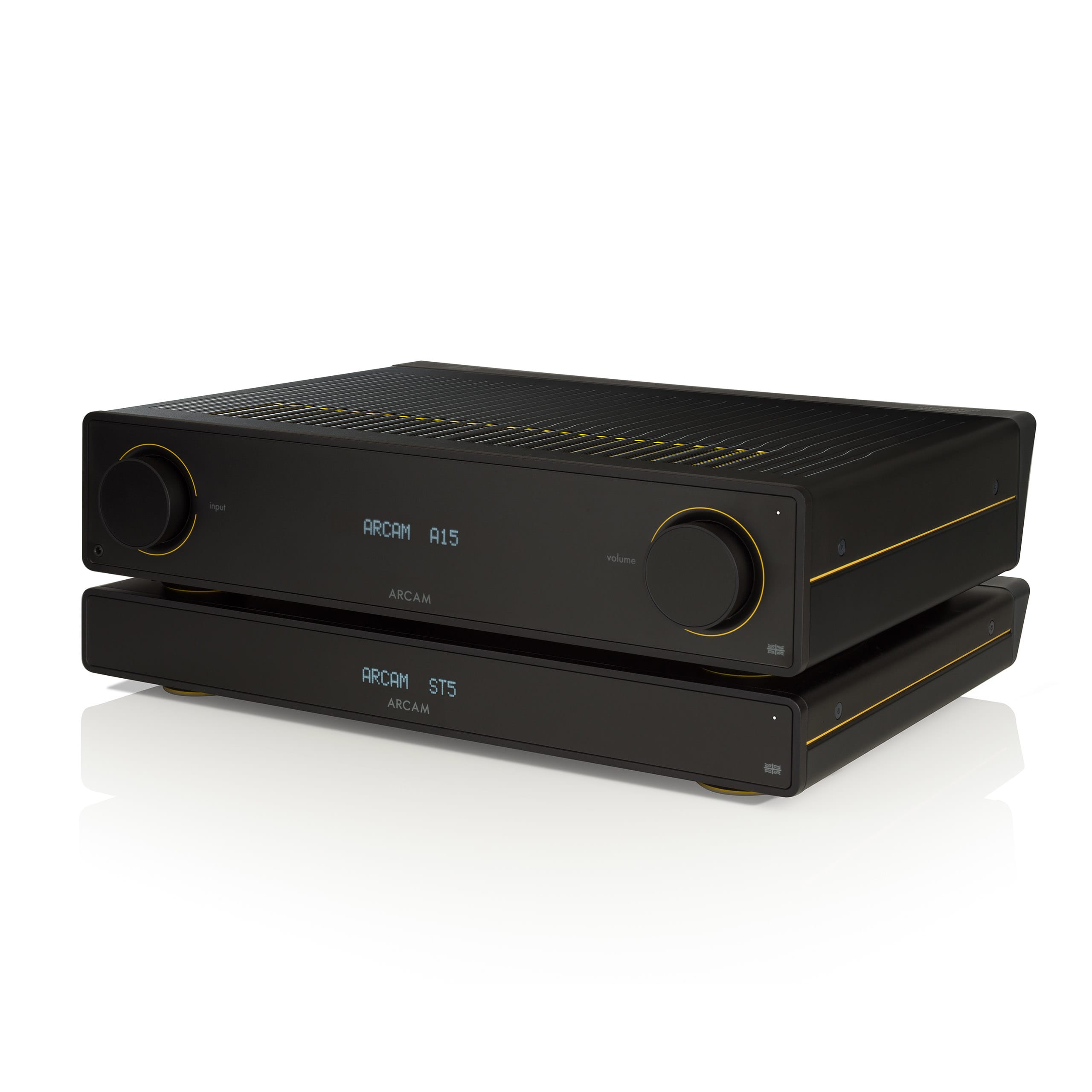
The ARCAM A15+ was drawn to sit with the rest of the Radia family. Matching chassis proportions allow the ST5 or ST25 streamer and the CD5 CD player to stack cleanly, and a dedicated control input links ARCAM Radia source components so the whole system responds as one.
Advice on loudspeaker matching, room scale and the balance of the rest of the system is the part that cannot be read off a specification sheet. Our team in London is glad to discuss any of it.
About ARCAM
ARCAM was founded in Cambridge in 1976 as A&R Cambridge, and the first product — the A60 integrated amplifier — became one of the defining British components of the decade. Owners kept those amplifiers running for twenty years and more, which tells a story that no measurement can. Nearly fifty years later, amplification remains the discipline ARCAM is known for, with design and engineering still carried out in Cambridge. The Radia range represents the current generation: aluminium construction throughout, Class AB circuitry, ESS conversion and wireless technology that arrived ahead of the category rather than behind. ARCAM has always favoured musical honesty over specification theatre, which is why the reputation has outlasted so many British contemporaries of the same vintage.