A Sealed Cabinet in a Ported World
Almost every compact loudspeaker at this level uses a port, because a port is the cheapest way to manufacture bass. The Spendor A1.2 does not. The cabinet is sealed, which costs low-frequency extension on paper and repays the loss in every way that matters in a real room: bass that starts and stops when the music does, no port chuffing at volume, and none of the swollen upper bass that makes ported designs unusable within a foot of a wall. Small rooms are where most loudspeakers fall apart. The Spendor A1.2 was engineered for exactly that constraint.
The EP77 Cone and What Polymer Buys
Spendor develops the bass and midrange cone in-house, a 15cm EP77 polymer, and the choice is an acoustic argument rather than a manufacturing one. Stiff cone materials ring; soft ones lose detail. The EP77 blend sits between the two, self-damping enough to stay free of colouration while retaining the resolution to place a voice precisely in a room. Play something exposed — an unaccompanied cello, a close-miked vocal — and the presentation is neither analytical nor soft-focused. Spendor calibrates every pair to broadcast reference standard, a discipline that shows most clearly in the midband.
Treble Without Hardness
A 22mm polyamide dome handles high frequencies, crossing over at 4.2kHz and extending to 26kHz in a typical room. Polyamide is an unfashionable choice next to beryllium or diamond, and deliberately so: polyamide is well-damped, where harder domes store energy and give that energy back as brightness. Cymbals decay rather than splash, and violin sections keep texture at volume. Over an evening rather than a demonstration track, that restraint is what allows the Spendor A1.2 to be lived with.
Bracing, and the Case Against a Singing Cabinet
A small enclosure is under more pressure per litre than a large one, and a cabinet that flexes stamps a signature on every recording played through the loudspeaker. The mark 2 revision introduced a refined internal bracing system that reduces panel vibration, cabinet interaction and time smearing. The audible result is a lower noise floor and a cleaner midrange — detail that was always in the recording, simply no longer masked by the box doing the reproducing.
Placement in a Small Room
At 308mm tall and only 186mm deep, the Spendor A1.2 fits where a loudspeaker of this calibre normally cannot: a shelf, an alcove, a sideboard, or a pair of dedicated stands. The sealed alignment means near-wall placement remains a legitimate option rather than a compromise, and music stays tuneful and articulate close to a boundary. Recessed precision binding posts on the rear keep cable dressing tidy against a wall, and a magnetic grille is supplied for use with or without.
Matching an Amplifier to the Spendor A1.2
An eight-ohm nominal load that never drops below 6.4 ohms makes the Spendor A1.2 an undemanding partner, and Spendor specifies an amplifier range of 25 to 100 watts. Sensitivity is modest, so quality of drive matters more than quantity — a well-engineered integrated amplifier will outperform a higher-wattage design of lesser pedigree. That undemanding load also opens the door to lower-powered valve amplification, which suits the polymer midrange particularly well. Audio Lounge can demonstrate several pairings in a single visit.
Four Finishes, Built in Britain
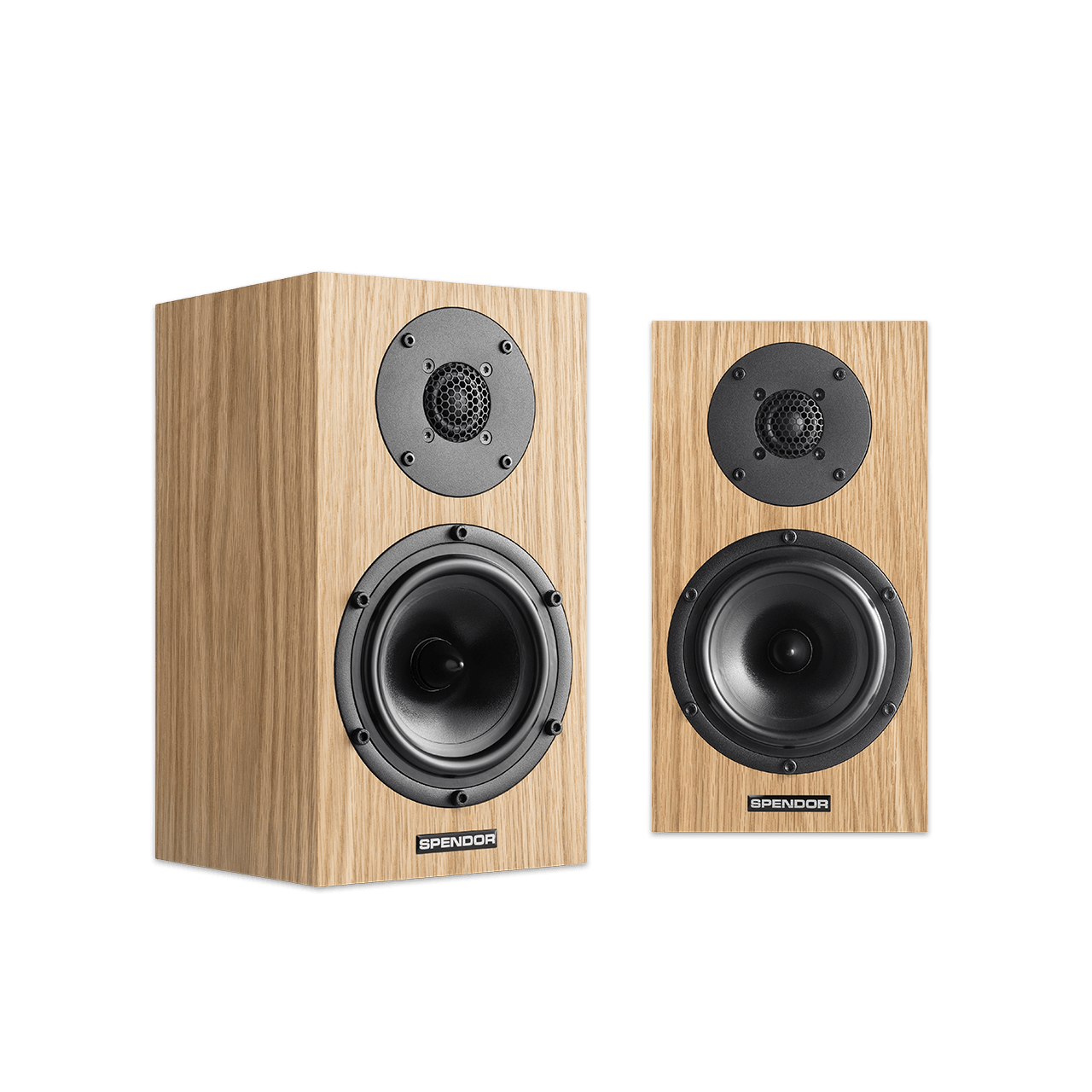
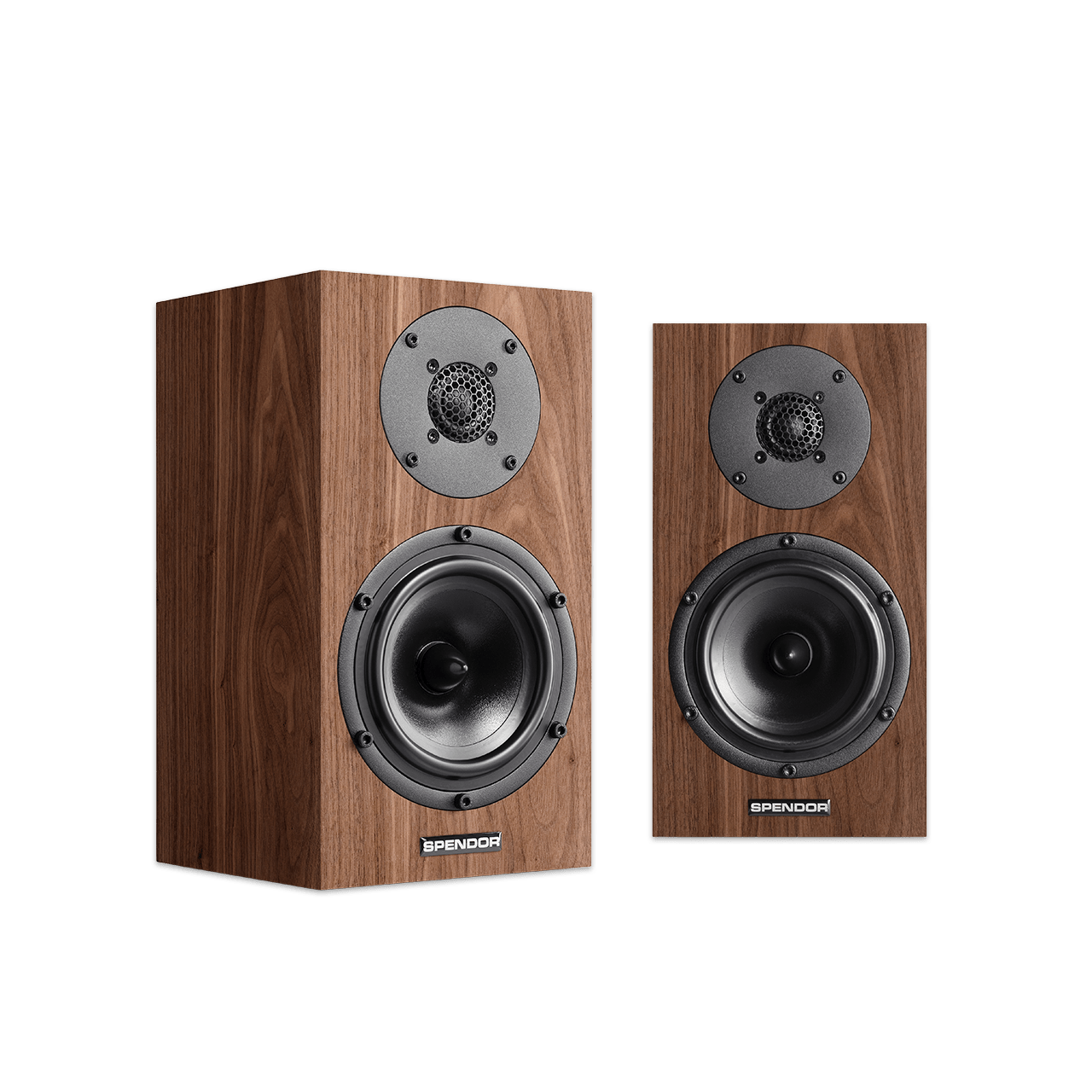
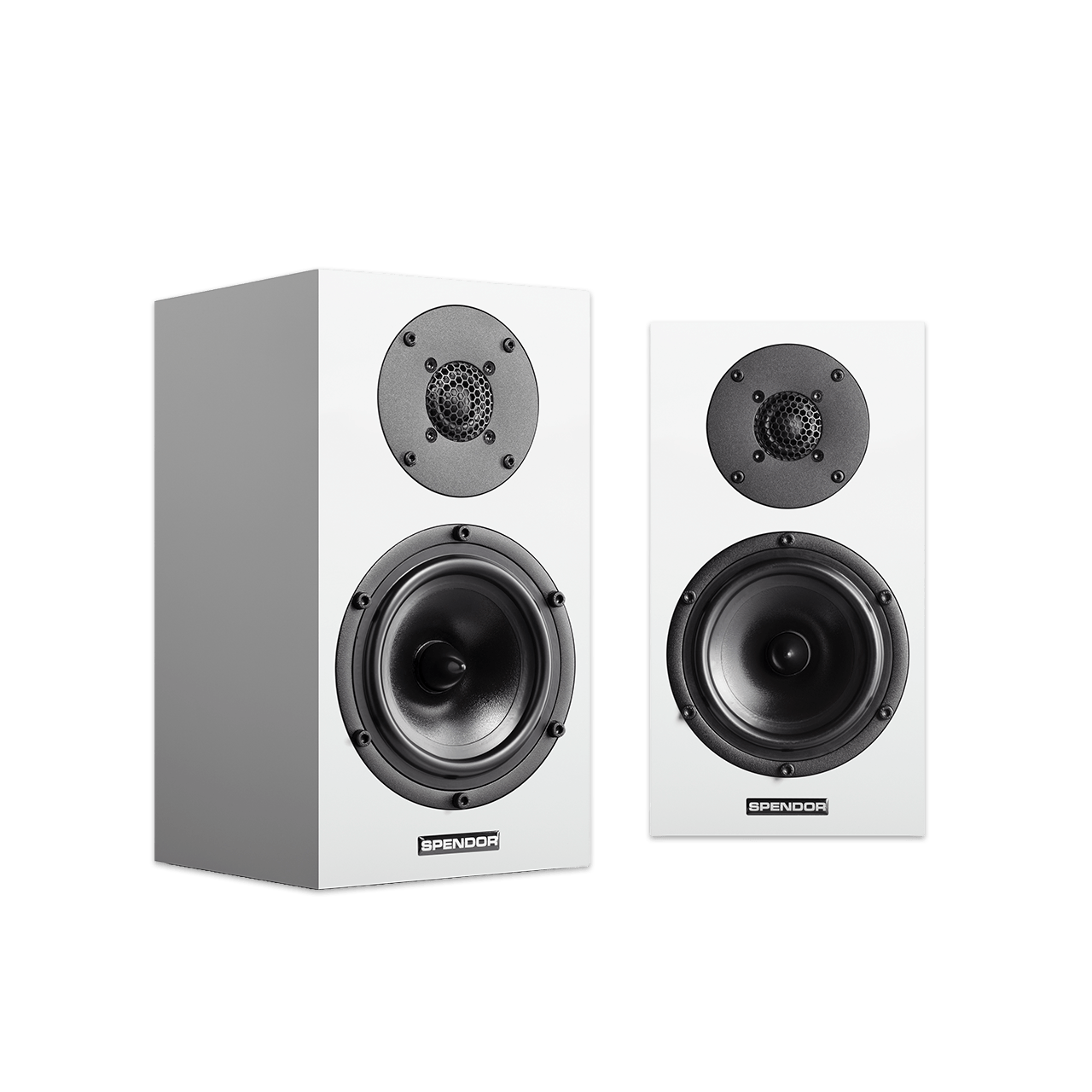
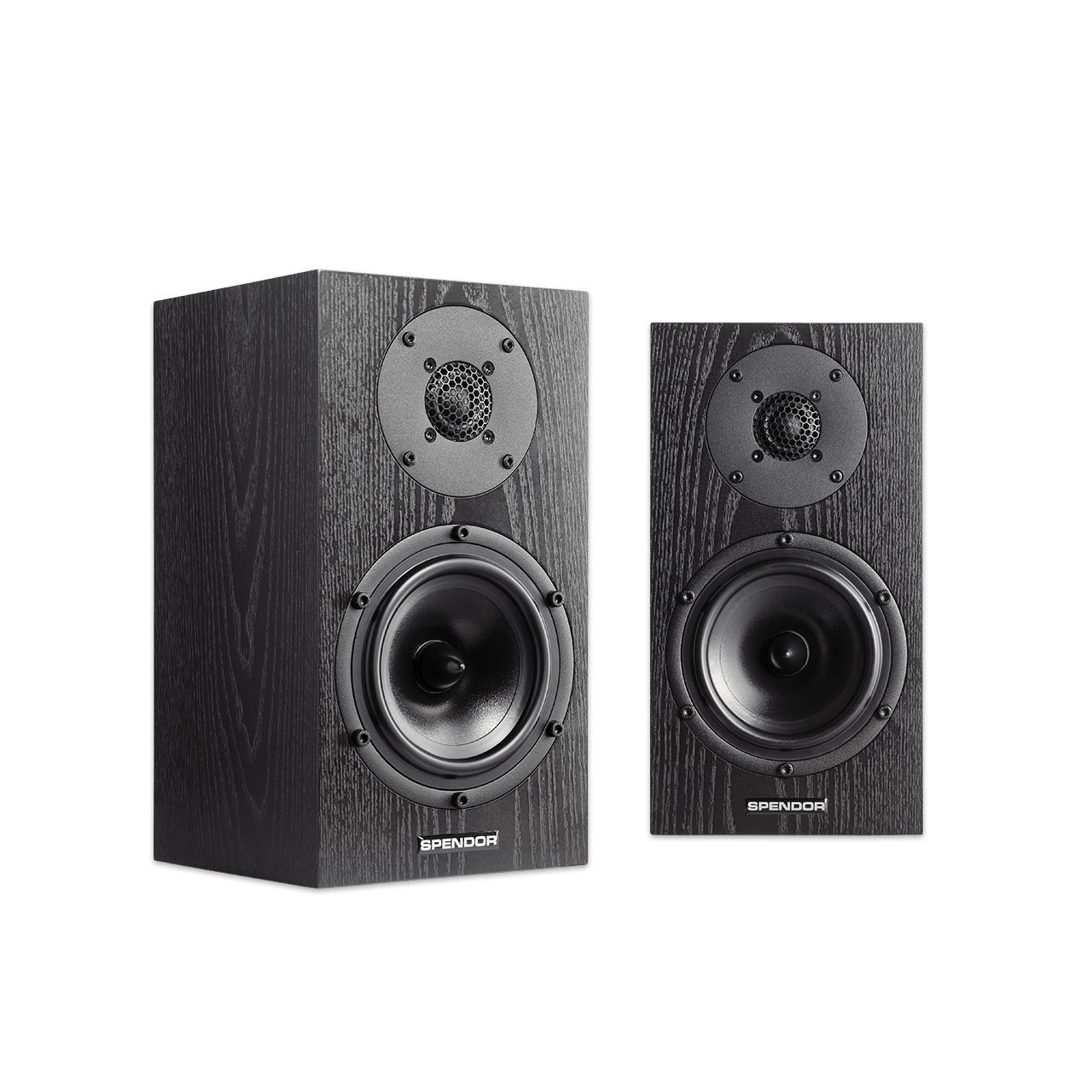
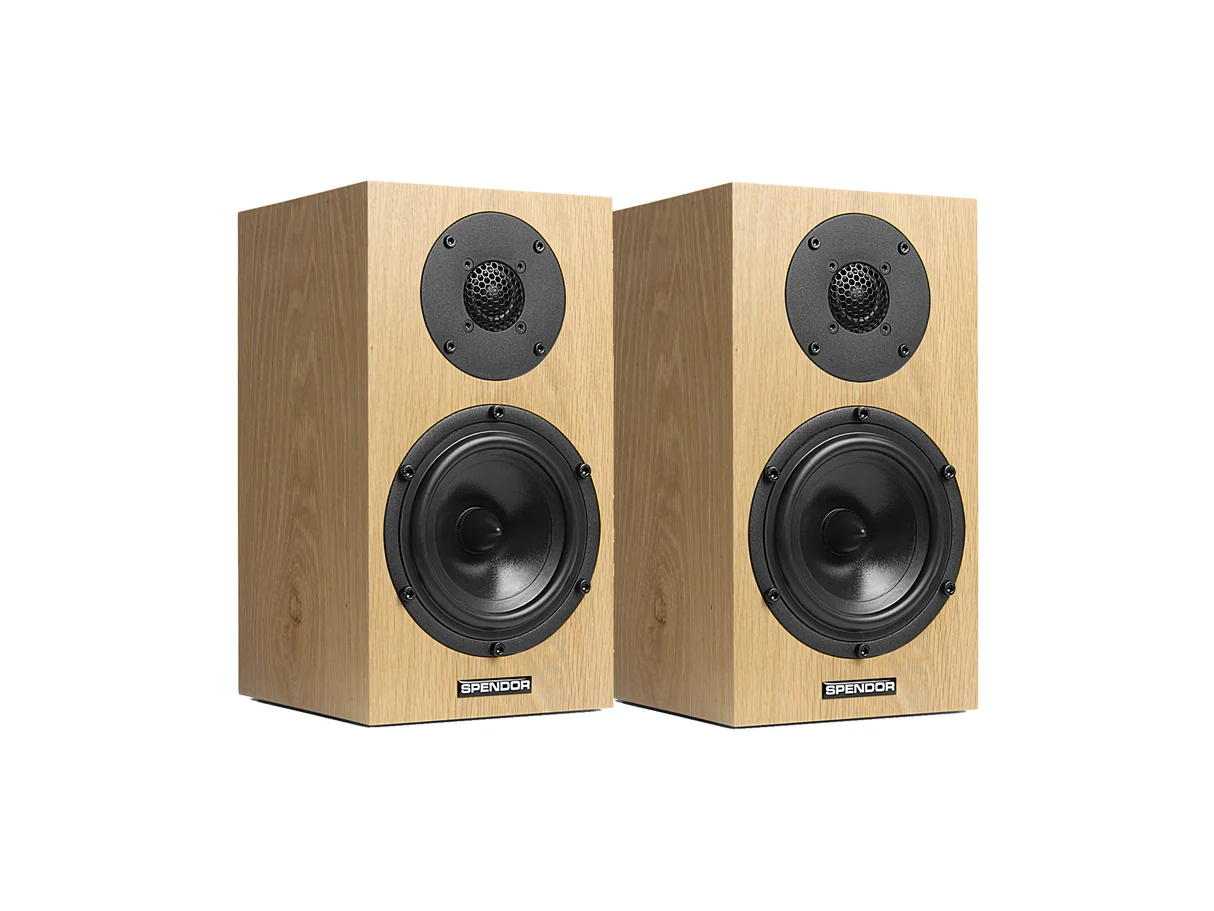
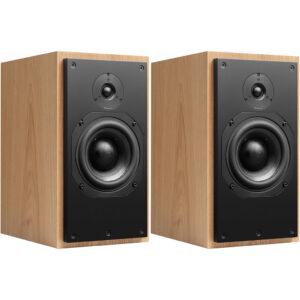
Black oak, oak, walnut and satin white are available across the A-Line, and every cabinet is designed and manufactured in the United Kingdom. The finish choice is cosmetic rather than acoustic — the specification is identical across all four — so the decision belongs to the room rather than to the system. Satin white disappears against a pale wall; walnut and oak read as furniture; black oak recedes in a darker interior.
Where the Spendor A1.2 Sits in the A-Line
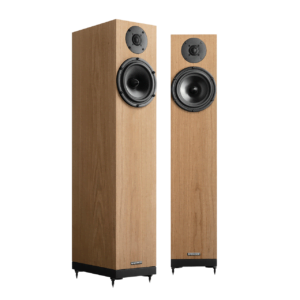
The A1.2 is the smallest model in the A-Line MK2 range and the only sealed design among the shelf mounts. Above sits the A2.2, a slim two-way floorstander sharing the same 15cm cone and 22mm dome with deeper reach; the A4.2 and A7.2 step up to a larger 18cm cone and a rear-chambered 27mm soft dome tweeter. Anyone with the floor space should hear the A2.2 alongside; anyone without should stop here, because the Spendor A1.2 gives up remarkably little in exchange.
About Spendor
Spendor Audio Systems has built loudspeakers in Britain for decades, and continues to design and manufacture every model in the United Kingdom rather than outsourcing production. Drive units are developed in-house, cabinets are braced and finished on the same site, and every pair is calibrated and matched to broadcast reference standard before leaving the factory. That consistency is why a Spendor cabinet of any size shares a recognisable character: honest, uncoloured and free of exaggeration. Audio Lounge stocks Spendor at 138-140 Wigmore Street, London, where the full A-Line and Classic ranges can be auditioned in dedicated listening rooms. Explore the Spendor range.
Questions About the Spendor A1.2
What is the Spendor A1.2?
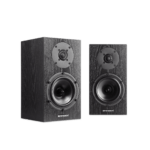
The Spendor A1.2 is a two-way sealed shelf mount loudspeaker, the smallest model in the Spendor A-Line MK2 range. A 15cm EP77 polymer bass and midrange cone pairs with a 22mm polyamide dome tweeter in a braced closed-box cabinet measuring 308 x 165 x 186mm. Designed and manufactured in Britain, available in four finishes. Audition a pair at Audio Lounge, London.
What are the Spendor A1.2 specs?
Two-way sealed shelf mount; typical in-room response 60Hz to 26kHz; crossover 4.2kHz; HF driver 22mm polyamide dome; bass and midrange driver 15cm EP77 polymer cone; sensitivity 83dB for one watt at one metre; nominal impedance eight ohms, minimum 6.4; amplifier 25 to 100 watts; power handling 100 watts unclipped programme; 308 x 165 x 186mm; 4.8kg net; single pair recessed precision binding posts; magnetic grille supplied.
What is the difference between the Spendor A1 and the A1.2?
The A1.2 is the mark 2 revision of the original A1. Spendor kept the essential character and changed the engineering underneath, most significantly a refined internal bracing system that reduces cabinet interaction and time smearing. Enhanced driver and cabinet damping applies across the MK2 range. The A1.2 stands 308mm tall against the original’s 310mm and shares the same sealed alignment.
Is the Spendor A1.2 ported or sealed?
Sealed. The A1.2 uses a closed-box enclosure, unusual at this size and price, where almost all rivals are ported. A sealed alignment trades a little low-frequency extension for bass that is tauter and better controlled, and removes port turbulence entirely — which is why the Spendor A1.2 stays composed close to a wall where ported compact speakers become heavy.
What amplifier does the Spendor A1.2 need?
Spendor specifies 25 to 100 watts. Nominal impedance is eight ohms with a minimum of 6.4 ohms, an easy load that suits a wide range of amplifiers, valve designs included. Sensitivity is 83dB for one watt at one metre, so amplifier quality matters more than headline power. Audio Lounge can demonstrate several amplifier pairings in a single visit.
Can the Spendor A1.2 be placed close to a wall?
Yes — near-wall placement is one of the design’s real strengths. The sealed cabinet produces no port output to load against a boundary, so music remains tuneful and articulate where ported compact loudspeakers turn thick in the upper bass. Recessed binding posts keep cable dressing tidy against a wall. A few centimetres of breathing room still improves depth of image.
What finishes are the Spendor A1.2 available in?
Four finishes: black oak, oak, walnut and satin white. All four carry an identical specification, so the choice is cosmetic rather than acoustic. Every cabinet is designed and manufactured in the United Kingdom. Occasional open-box and ex-demonstration units appear in individual finishes at Audio Lounge and are listed separately.
Do the Spendor A1.2 need stands?
Stands, a shelf and an alcove are all legitimate placements — the A1.2 is a shelf mount design by definition. Dedicated stands that bring the tweeter near seated ear height will give the most precise imaging and the cleanest midrange. Where floor space is scarce, a solid shelf remains a proper option rather than a compromise, thanks to the sealed alignment.
How big are the Spendor A1.2 speakers?
Each cabinet measures 308mm high, 165mm wide and 186mm deep, weighing 4.8kg. That depth of under 19cm is what allows placement on a standard bookshelf, in an alcove or on a sideboard where a ported design of similar output would not fit. A magnetic grille is supplied and adds no measurable depth.
Where can the Spendor A1.2 be heard in London?
Audio Lounge demonstrates the Spendor A1.2 at 138-140 Wigmore Street, London W1U 3SG, in dedicated listening rooms with a choice of partnering amplifiers and sources. Comparison against the A2.2 floorstander and other compact loudspeakers can be arranged in the same visit. Call +44 20 7487 4080 or enquire online to book a session.